Blog

  • 15 Macro-Balanced Breakfast Recipes Under 400 Calories

    15 Macro-Balanced Breakfast Recipes Under 400 Calories

    Tracking calories shouldn’t mean starting your day hungry. The right 400 calorie breakfast recipes deliver enough protein, healthy fats, and fiber to keep you satisfied until lunch without derailing your deficit. These meals work for busy parents rushing kids to school, professionals who need grab-and-go options, and anyone who wants structured nutrition without complicated math.

    Key Takeaway

    A well-built 400 calorie breakfast should contain 20 to 30 grams of protein, healthy fats, and complex carbs to prevent mid-morning crashes. Focus on whole eggs, Greek yogurt, oats, and lean proteins. Prep ingredients on Sunday for five-minute assembly during the week. Balance your macros based on your goals, whether that’s fat loss, muscle retention, or athletic performance.

    Why 400 Calories Works for Most People

    Four hundred calories represents about 20 to 25 percent of a typical 1,600 to 2,000 calorie daily intake. This range supports weight loss while providing enough energy for morning workouts, commutes, and focused work.

    The magic isn’t in the number itself. It’s in how you spend those calories.

    A 400 calorie breakfast built around refined carbs will leave you starving by 10 a.m. The same calorie count from protein, fiber, and healthy fats keeps hunger at bay for four to five hours.

    Protein is the anchor. Aim for at least 20 grams per meal. This supports muscle retention during a deficit and triggers satiety hormones that reduce cravings throughout the day.

    Building Blocks of a Balanced 400 Calorie Breakfast

    Every solid breakfast recipe combines three elements: protein, complex carbs, and healthy fats. Here’s how they work together.

    Protein sources (100 to 150 calories):
    – Two whole eggs or three egg whites
    – Greek yogurt (150g)
    – Cottage cheese (100g)
    – Lean turkey or chicken breast
    – Protein powder (one scoop)

    Complex carbs (100 to 150 calories):
    – Rolled oats (40g dry)
    – Whole grain bread (one slice)
    – Sweet potato (100g)
    – Quinoa (cooked, 80g)
    – Berries (150g)

    Healthy fats (50 to 100 calories):
    – Half an avocado
    – Almond butter (one tablespoon)
    – Nuts (15g)
    – Olive oil (one teaspoon)
    – Chia seeds (one tablespoon)

    Add vegetables for volume and micronutrients without adding significant calories. Spinach, tomatoes, peppers, and mushrooms all work.

    Macro Targets for Different Goals

    Your ideal macro split depends on whether you’re cutting, maintaining, or building muscle.

    Goal Protein (g) Carbs (g) Fat (g) Example Meal
    Fat Loss 30-35 30-35 10-12 Egg white scramble with veggies, small sweet potato
    Maintenance 25-30 40-45 12-15 Two eggs, oats with berries, almonds
    Muscle Gain 25-30 45-50 10-12 Protein pancakes with banana, Greek yogurt

    These ranges keep you within 380 to 420 calories while supporting your specific training goals.

    If you’re training fasted in the morning, prioritize carbs post-workout. If you lift in the evening, focus more on protein and fats at breakfast to stabilize energy.

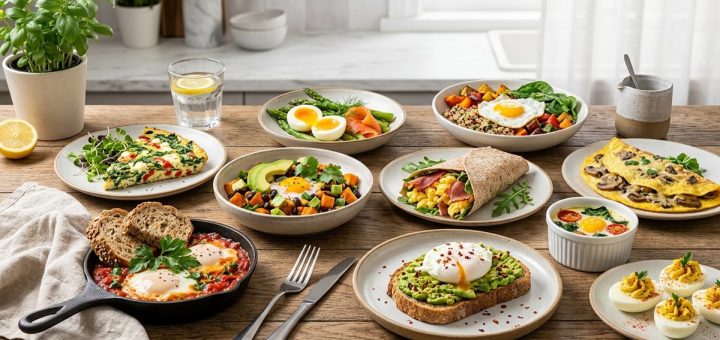
    Five Egg-Based Recipes Under 400 Calories

    Eggs deliver complete protein, essential vitamins, and healthy fats. They’re also cheap and cook in minutes.

    Veggie-Packed Scramble

    Two whole eggs scrambled with one cup spinach, half a diced bell pepper, and 30g feta cheese. Serve with one slice whole grain toast.

    Macros: 360 calories, 24g protein, 28g carbs, 16g fat

    Mexican Breakfast Bowl

    Two eggs cooked over easy on top of 80g black beans, quarter avocado, salsa, and cilantro. Skip the tortilla to save calories.

    Macros: 385 calories, 22g protein, 32g carbs, 18g fat

    Egg White Frittata Cups

    Six egg whites mixed with diced turkey sausage, cherry tomatoes, and onions. Bake in muffin tins. Eat three cups with one small apple.

    Macros: 340 calories, 32g protein, 35g carbs, 6g fat

    Smoked Salmon Scramble

    Two eggs scrambled with 50g smoked salmon, capers, and dill. Serve with 100g roasted asparagus.

    Macros: 310 calories, 28g protein, 8g carbs, 18g fat

    Breakfast Burrito

    Two scrambled eggs with 30g reduced-fat cheese wrapped in a small whole wheat tortilla with pico de gallo.

    Macros: 395 calories, 26g protein, 32g carbs, 16g fat

    Make frittata cups on Sunday. Store in the fridge for grab-and-go breakfasts all week. They reheat in 45 seconds.

    Four Oat-Based Options That Actually Fill You Up

    Oats provide slow-digesting carbs and soluble fiber that keeps blood sugar stable. Add protein to make them a complete meal.

    Protein Overnight Oats

    Mix 40g rolled oats with 150g Greek yogurt, half a scoop vanilla protein powder, cinnamon, and 100g berries. Refrigerate overnight.

    Macros: 380 calories, 32g protein, 48g carbs, 6g fat

    Baked Apple Oatmeal

    Combine 40g oats, one diced apple, cinnamon, and 200ml unsweetened almond milk. Bake at 350°F for 25 minutes. Top with 15g walnuts.

    Macros: 365 calories, 10g protein, 52g carbs, 14g fat

    Add a scoop of protein powder to boost protein to 30g if needed.

    Savory Oats with Egg

    Cook 40g oats in chicken broth. Top with one fried egg, sautéed mushrooms, and green onions.

    Macros: 340 calories, 18g protein, 42g carbs, 11g fat

    Peanut Butter Banana Oats

    Cook 40g oats with water. Stir in half a tablespoon peanut butter and half a sliced banana. Add a pinch of salt.

    Macros: 350 calories, 11g protein, 52g carbs, 11g fat

    Prep overnight oats in mason jars. Make five at once for the entire work week. They last up to five days in the fridge when stored properly, as explained in why your meal prep goes bad after 3 days and how to fix it.

    Three High-Protein Yogurt Bowls

    Greek yogurt packs 15 to 20 grams of protein per cup. Build around it for a no-cook breakfast.

    Berry Protein Bowl

    200g plain Greek yogurt topped with 100g mixed berries, 15g granola, and one tablespoon chia seeds.

    Macros: 370 calories, 28g protein, 42g carbs, 10g fat

    Tropical Protein Bowl

    200g Greek yogurt with 80g diced mango, 15g unsweetened coconut flakes, and 10g almonds.

    Macros: 385 calories, 26g protein, 38g carbs, 14g fat

    Chocolate Peanut Butter Bowl

    150g Greek yogurt mixed with one tablespoon cocoa powder, half a tablespoon peanut butter, and one sliced banana.

    Macros: 360 calories, 24g protein, 46g carbs, 9g fat

    Buy plain yogurt and add your own toppings. Flavored varieties contain added sugars that waste calories without improving satiety.

    Two Protein Pancake Variations

    Pancakes don’t have to be a cheat meal. These versions deliver protein and complex carbs.

    Classic Protein Pancakes

    Blend one banana, two egg whites, 30g oats, and half a scoop vanilla protein powder. Cook in a non-stick pan. Top with 100g berries.

    Macros: 350 calories, 30g protein, 48g carbs, 4g fat

    Cottage Cheese Pancakes

    Mix 100g cottage cheese, two eggs, 30g oat flour, and cinnamon. Cook small pancakes. Serve with sugar-free syrup and 80g blueberries.

    Macros: 380 calories, 32g protein, 38g carbs, 10g fat

    Make a double batch and freeze extras. Reheat in the toaster for a fast weekday breakfast that rivals 10 high protein breakfast recipes ready in under 10 minutes.

    Three Toast-Based Meals

    Whole grain toast provides fiber and B vitamins. Top it strategically to hit your macros.

    Avocado Egg Toast

    One slice whole grain bread topped with quarter avocado and one poached egg. Season with everything bagel seasoning.

    Macros: 320 calories, 14g protein, 28g carbs, 16g fat

    Add 100g cherry tomatoes on the side to reach 360 calories.

    Cottage Cheese Berry Toast

    One slice whole grain bread topped with 100g cottage cheese and 100g mixed berries. Drizzle with honey (one teaspoon).

    Macros: 290 calories, 20g protein, 44g carbs, 4g fat

    Add 10g almonds to bring calories to 360 and add healthy fats.

    Smoked Salmon Toast

    One slice whole grain bread with 50g smoked salmon, 30g light cream cheese, capers, and red onion.

    Macros: 280 calories, 20g protein, 26g carbs, 10g fat

    Serve with 150g cucumber slices to add volume.

    Toast-based meals assemble in under three minutes. Keep smoked salmon and cottage cheese stocked for zero-cook protein sources.

    Common Mistakes That Wreck Your Macros

    Even well-intentioned breakfast builders make these errors.

    Mistake 1: Drinking your calories

    A large latte with milk adds 150 to 200 calories before you eat anything. Switch to black coffee or use unsweetened almond milk.

    Mistake 2: Eyeballing portions

    Two tablespoons of peanut butter can easily become four when you’re not measuring. That’s an extra 200 calories. Use a food scale for calorie-dense items.

    Mistake 3: Skipping protein

    Oatmeal with fruit sounds healthy but contains only 6 to 8 grams of protein. You’ll be hungry by 10 a.m. Always add Greek yogurt, protein powder, or eggs.

    Mistake 4: Forgetting vegetables

    Vegetables add volume, fiber, and nutrients without many calories. Spinach, tomatoes, and peppers should appear in most breakfasts.

    Mistake 5: Relying on bars and shakes

    Protein bars and meal replacement shakes work occasionally but don’t teach you how to build balanced meals. Whole foods provide better satiety and nutrition.

    “The biggest mistake I see is people choosing foods based solely on calories instead of how those calories are distributed across protein, carbs, and fats. A 400 calorie muffin and a 400 calorie egg scramble with veggies will affect your hunger, energy, and body composition completely differently.” — Registered Dietitian

    Meal Prep Strategy for Five Days

    Batch cooking on Sunday sets you up for success all week. Here’s a simple system.

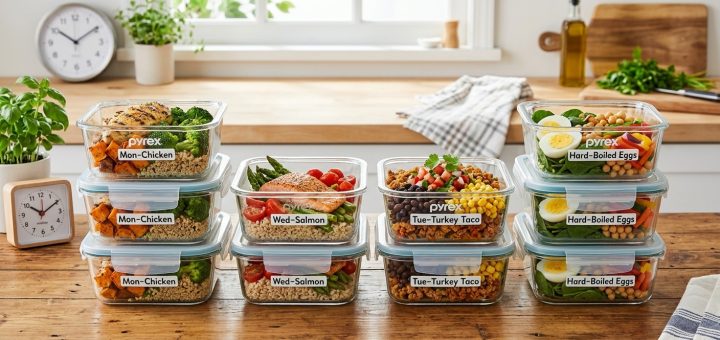
    1. Cook a dozen hard-boiled eggs. Peel and store in the fridge.
    2. Prep five servings of overnight oats in mason jars.
    3. Chop vegetables for scrambles and store in containers.
    4. Cook a batch of egg frittata cups or protein pancakes.
    5. Portion Greek yogurt into five containers with toppings on the side.

    This approach gives you three different breakfast options each day without cooking every morning. Rotate recipes weekly to avoid boredom, using strategies from how to meal prep 20 high-protein breakfasts in under 2 hours.

    What to Eat Before Morning Workouts

    Training fasted works for some people. Others need fuel to perform.

    If you work out within 30 minutes of waking, keep it light. Try half a banana with a tablespoon of almond butter (150 calories). Save the full 400 calorie meal for post-workout.

    If you have 60 to 90 minutes before training, eat a balanced meal with moderate carbs and protein. The veggie scramble or protein oats both work well.

    For strength training, prioritize protein and carbs. For steady-state cardio, a mix of all three macros provides sustained energy.

    Post-workout nutrition matters more than pre-workout for most people. Learn more about timing in the ultimate guide to post-workout nutrition: what to eat and when.

    Adjusting Recipes for Different Calorie Targets

    These recipes scale easily if you need more or fewer calories.

    To reduce to 300 calories:
    – Use egg whites instead of whole eggs
    – Cut cheese portions in half
    – Reduce oats from 40g to 30g
    – Skip added fats like nuts or avocado

    To increase to 500 calories:
    – Add an extra egg
    – Double the nut or seed portion
    – Add a piece of fruit
    – Include a slice of whole grain toast

    Track everything in a food app for the first week. Once you understand portion sizes, you can estimate accurately without constant logging.

    Shopping List for Budget-Friendly Breakfasts

    These staples cover most of the recipes above and cost less than $50 for a week.

    • Eggs (18 count)
    • Greek yogurt (large container, plain)
    • Rolled oats (large canister)
    • Whole grain bread (one loaf)
    • Frozen berries (two bags)
    • Bananas (bunch of 6)
    • Spinach (one bag)
    • Bell peppers (3)
    • Cherry tomatoes (one container)
    • Avocados (2 to 3)
    • Natural peanut butter (one jar)
    • Cottage cheese (one container)
    • Reduced-fat cheese (one package)
    • Protein powder (if not already stocked)

    Buy in bulk when possible. Eggs, oats, and frozen berries are cheaper at warehouse stores.

    For more budget strategies, check out 5-day muscle building meal prep on a budget: complete shopping list included.

    Tracking Progress Beyond the Scale

    Weight loss isn’t the only measure of success. Pay attention to these signals too.

    Energy levels: Do you feel alert and focused until lunch, or are you crashing by mid-morning?

    Hunger patterns: Are you satisfied for four to five hours, or are you raiding the snack drawer by 10 a.m.?

    Workout performance: Can you complete your training sessions with good energy, or do you feel depleted?

    Body composition: Are you losing fat while maintaining muscle, or just seeing the scale drop?

    If you’re constantly hungry on 400 calories, you might need to adjust. Some people need 450 to 500 calories at breakfast and can reduce other meals. Others do better with 300 calories at breakfast and larger lunch and dinner portions.

    Experiment for two to three weeks before making changes. Your body needs time to adapt to new eating patterns.

    Making Breakfasts More Filling Without Adding Calories

    Volume matters for satiety. These tricks help you feel fuller without exceeding your calorie target.

    • Add vegetables to every meal (spinach, peppers, tomatoes, mushrooms)
    • Use cauliflower rice to bulk up scrambles
    • Choose high-volume fruits like berries and melon over bananas
    • Drink water or herbal tea with your meal
    • Eat slowly and chew thoroughly
    • Include fiber-rich foods like oats and chia seeds

    Protein and fiber work together to slow digestion and extend fullness. A breakfast with 25 grams of protein and 8 grams of fiber will always outperform one with 10 grams of protein and 2 grams of fiber, even at the same calorie count.

    Your Morning Routine Matters More Than the Recipe

    The best breakfast recipe is the one you’ll actually make. If you hate eggs, don’t force yourself to eat them just because they’re high in protein. Find alternatives that work for your preferences and schedule.

    Consistency beats perfection. Eating a solid 400 calorie breakfast five days a week will get you better results than eating a “perfect” breakfast twice and skipping the rest of the week.

    Start with two or three recipes you know you’ll enjoy. Master those before adding variety. Once you’re comfortable with the basics, branch out to new ingredients and combinations.

    Your breakfast should support your goals, fit your lifestyle, and taste good enough that you look forward to it. When those three factors align, hitting your calorie and macro targets becomes effortless instead of a daily struggle.

  • How to Build the Perfect Post-Workout Smoothie for Muscle Recovery

    You just crushed your workout. Your muscles are screaming. Your energy tank is empty. And you’re about to make the same mistake most gym-goers make: grabbing whatever’s convenient instead of what your body actually needs to rebuild and recover.

    Key Takeaway

    A post workout smoothie for muscle recovery needs three core components: 20-30g protein to repair muscle tissue, fast-digesting carbs to restore glycogen, and anti-inflammatory ingredients to reduce soreness. Timing matters too. Consume within 30-60 minutes after training for optimal nutrient absorption. The right blend accelerates recovery, reduces muscle breakdown, and prepares your body for the next session without complicated meal prep or expensive supplements.

    Why Your Recovery Window Actually Matters

    Your muscles don’t grow in the gym. They grow during recovery.

    After intense training, your muscle fibers are damaged. Glycogen stores are depleted. Your body enters a catabolic state where it breaks down muscle tissue for energy unless you intervene with proper nutrition.

    The 30 to 60 minute window after your workout is when your muscles are most receptive to nutrients. Insulin sensitivity peaks. Protein synthesis rates are elevated. Your body is primed to absorb and use whatever you feed it.

    A well-designed smoothie hits your system faster than solid food. No digestion lag. No prep time. Just nutrients delivered exactly when your body needs them most.

    The Three Non-Negotiable Components

    Every effective post workout smoothie for muscle recovery needs these three elements working together.

    Protein for Muscle Repair

    Your muscles need amino acids to rebuild stronger than before. Aim for 20 to 30 grams of high-quality protein per smoothie.

    The best sources blend fast and slow-digesting proteins:

    • Whey protein isolate (absorbed in 30 minutes)
    • Greek yogurt (casein for sustained amino acid release)
    • Collagen peptides (supports connective tissue repair)
    • Plant-based blends with pea, rice, and hemp

    How much protein do you really need after a workout depends on your training intensity and body weight, but 0.25 to 0.4 grams per kilogram of body weight is the research-backed sweet spot.

    Carbohydrates to Restore Glycogen

    Carbs aren’t the enemy. They’re fuel.

    During resistance training or cardio, your body burns through glycogen stored in your muscles. Without replenishing it, your next workout suffers. Your recovery stalls.

    Target a 2:1 or 3:1 ratio of carbs to protein for optimal glycogen restoration.

    Best carb sources for recovery smoothies:

    • Banana (natural sugars plus potassium for muscle function)
    • Frozen mango or pineapple (vitamin C supports collagen synthesis)
    • Oats (slow-release energy plus fiber)
    • Dates (concentrated natural sugars without artificial sweeteners)
    • Sweet potato (yes, it blends surprisingly well)

    Healthy Fats and Anti-Inflammatory Boosters

    Fats slow digestion slightly, but they also reduce inflammation and support hormone production. Keep them moderate in your immediate post-workout blend.

    Smart fat additions:

    • Almond butter or cashew butter (1-2 tablespoons)
    • Chia seeds or flax seeds (omega-3s for joint health)
    • Avocado (creamy texture plus healthy monounsaturated fats)
    • Coconut oil or MCT oil (quick energy source)

    Add anti-inflammatory ingredients to combat exercise-induced muscle damage:

    • Tart cherry juice (reduces soreness and improves sleep)
    • Turmeric with black pepper (curcumin absorption)
    • Ginger (natural anti-inflammatory)
    • Spinach or kale (antioxidants without changing flavor much)

    Building Your Base Formula

    Stop guessing. Use this proven framework every time.

    1. Choose your liquid base (1 to 1.5 cups): unsweetened almond milk, coconut water, regular milk, or even brewed green tea
    2. Add your protein source (1 scoop or equivalent to 20-30g protein)
    3. Include 1 to 2 servings of fruit for carbs and natural sweetness
    4. Blend in healthy fats (1-2 tablespoons of nut butter or seeds)
    5. Boost with recovery superfoods (handful of greens, pinch of turmeric, etc.)
    6. Add ice and blend until smooth

    The order matters less than the ratios. Adjust based on your calorie needs and training intensity.

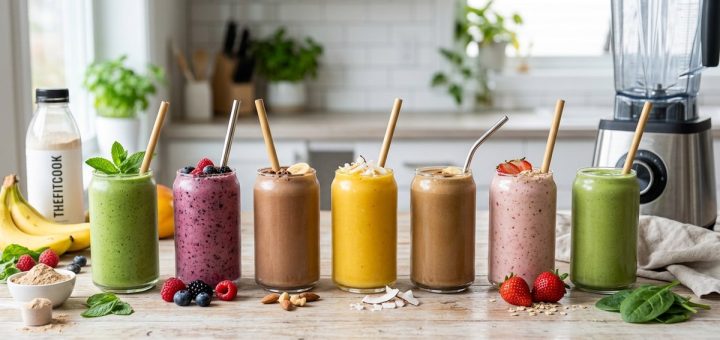
    Five Recovery Smoothie Recipes That Actually Work

    The Classic Muscle Builder

    • 1 cup unsweetened almond milk
    • 1 scoop vanilla whey protein
    • 1 frozen banana
    • 2 tablespoons almond butter
    • Handful of spinach
    • 1/2 teaspoon cinnamon
    • Ice to desired thickness

    Nutrition: Approximately 380 calories, 30g protein, 35g carbs, 14g fat

    Berry Blast Anti-Inflammatory

    • 1 cup coconut water
    • 1 scoop vanilla protein powder
    • 1 cup frozen mixed berries
    • 1/4 cup plain Greek yogurt
    • 1 tablespoon chia seeds
    • 1/4 cup tart cherry juice
    • Small piece of fresh ginger

    Nutrition: Approximately 320 calories, 28g protein, 42g carbs, 6g fat

    Tropical Recovery Punch

    • 1 cup coconut milk (from carton, not can)
    • 1 scoop vanilla or unflavored protein
    • 1/2 cup frozen mango
    • 1/2 cup frozen pineapple
    • 1/2 banana
    • 1 tablespoon coconut oil
    • Squeeze of lime juice

    Nutrition: Approximately 360 calories, 26g protein, 48g carbs, 8g fat

    Chocolate Peanut Butter Power

    • 1 cup whole milk or oat milk
    • 1 scoop chocolate protein powder
    • 1 frozen banana
    • 2 tablespoons natural peanut butter
    • 1 tablespoon cocoa powder
    • 1/4 cup rolled oats
    • Pinch of sea salt

    Nutrition: Approximately 450 calories, 32g protein, 52g carbs, 16g fat

    Green Machine Recovery

    • 1 cup unsweetened almond milk
    • 1 scoop vanilla protein
    • 1 cup packed spinach
    • 1/2 avocado
    • 1/2 green apple
    • 1/2 frozen banana
    • 1 tablespoon flax seeds
    • 1/4 teaspoon turmeric
    • Pinch of black pepper

    Nutrition: Approximately 380 calories, 28g protein, 38g carbs, 14g fat

    Common Mistakes That Sabotage Recovery

    Mistake Why It Hurts Recovery Better Approach
    Adding too much fruit Excessive sugar without protein balance causes insulin spike and crash Stick to 1-2 servings of fruit, balance with protein and fats
    Skipping protein entirely No amino acids means no muscle repair Always include 20-30g quality protein source
    Using only fruit juice as base Empty calories, blood sugar roller coaster Choose unsweetened milk alternatives or coconut water
    Waiting 2+ hours to drink it Missing the optimal nutrient absorption window Consume within 30-60 minutes post-workout
    Making it too thick to drink You won’t finish it, wasting nutrients Add more liquid, blend longer for smooth consistency
    Relying on artificial sweeteners May disrupt gut health and nutrient absorption Use dates, banana, or small amount of honey if needed

    Timing Your Smoothie for Maximum Results

    The science is clear. Nutrient timing influences how effectively your body uses what you feed it.

    Drink your recovery smoothie within 30 to 60 minutes after your last set. This window is when muscle protein synthesis rates peak and glycogen storage is most efficient.

    For morning workouts, your smoothie can double as breakfast. Just finished an evening session? Make it your dinner or pair it with a lighter meal an hour later.

    If you train fasted, the post-workout smoothie becomes even more critical. Your body has been in a catabolic state for hours. Fast-acting nutrients stop muscle breakdown immediately.

    “The post-exercise period is often considered the most critical part of nutrient timing. Consuming the right nutrients after exercise is just as important as what you consume before. The main goals are to decrease muscle protein breakdown, increase muscle protein synthesis, restore glycogen stores, and enhance overall recovery.” – International Society of Sports Nutrition

    Customizing for Your Training Style

    Not all workouts demand the same recovery nutrition.

    Heavy strength training (powerlifting, bodybuilding): Increase protein to 30-40g. Add extra carbs if you’re in a muscle-building phase. The chocolate peanut butter power recipe works perfectly here.

    High-intensity interval training or CrossFit: You’ve depleted glycogen hard. Bump up the carb ratio to 3:1 or even 4:1. The tropical recovery punch delivers fast-acting sugars your muscles crave.

    Endurance cardio (running, cycling over 60 minutes): Focus on glycogen restoration with higher carbs. Add electrolytes through coconut water. The berry blast recipe with extra banana fits this need.

    Moderate weight training or yoga: Standard 2:1 carb-to-protein ratio works. The green machine provides balanced nutrition without excess calories.

    Prep Strategies That Save Time

    Blending a smoothie shouldn’t take 20 minutes. Here’s how to streamline the process.

    Freezer prep bags: Portion out all your ingredients except liquid and protein powder into freezer bags. Label them. Grab one, dump it in the blender, add liquid and protein, blend.

    Pre-portioned protein: Use a small container to measure out your protein powder the night before. No scooping with sweaty hands.

    Batch your boosters: Mix your turmeric, cinnamon, and other spices in a small jar. One shake adds everything at once.

    Keep a gym blender bottle ready: If you train away from home, bring your protein powder and dry ingredients. Buy a frozen banana and liquid at the gym’s cafe or nearby store. Shake and consume.

    If you’re serious about meal efficiency beyond smoothies, check out how to meal prep an entire week of lunches in under 2 hours for complementary strategies.

    What to Avoid in Recovery Smoothies

    Some ingredients sound healthy but actually slow your recovery.

    High-fiber vegetables in excess: Broccoli, cauliflower, and Brussels sprouts are nutritious but slow digestion when you need fast nutrient delivery. Save them for other meals.

    Too much fat: While healthy fats matter, exceeding 15-20g in your post-workout smoothie delays carb and protein absorption. Your muscles need those nutrients now, not in three hours.

    Artificial ingredients and fillers: Many protein powders contain maltodextrin, artificial sweeteners, and thickeners that provide zero recovery benefit. Read labels carefully.

    Alcohol-based extracts: That vanilla extract contains alcohol, which impairs protein synthesis. Use vanilla protein powder or vanilla bean instead.

    Raw egg whites: Biotin deficiency risk and potential salmonella exposure. Cooked eggs don’t blend well. Stick to quality protein powders or Greek yogurt.

    Upgrading Your Blender Game

    Your blender matters more than you think.

    A weak blender leaves chunks of spinach, doesn’t crush ice properly, and makes your smoothie gritty instead of creamy. You won’t want to drink it.

    Look for these features:

    • At least 1000 watts of power
    • Stainless steel blades
    • 64-ounce pitcher (room for ice expansion)
    • Pulse function for controlling texture
    • Easy-to-clean design (you’ll use it daily)

    Budget-friendly options under $100 work fine for basic smoothies. High-performance blenders ($200-400) handle frozen ingredients, nuts, and tough greens effortlessly.

    Clean your blender immediately after use. Add warm water and a drop of dish soap, blend for 30 seconds, rinse. Done.

    Tracking Your Recovery Progress

    Your smoothie is working if you notice these changes:

    • Reduced muscle soreness 24-48 hours after training
    • Improved performance in subsequent workouts
    • Faster strength gains over 4-6 weeks
    • Better energy levels throughout the day
    • Less fatigue during training sessions

    Keep a simple log. Note what you drank, when you consumed it, and how you felt the next day. Patterns emerge quickly.

    Adjust your recipe based on results. Feeling sluggish? Add more carbs. Not building muscle? Increase protein. Still sore after three days? Boost anti-inflammatory ingredients.

    If you’re struggling to hit your protein targets consistently, how to meal prep 150g protein daily without getting bored offers additional strategies beyond smoothies.

    Budget-Friendly Recovery Nutrition

    Quality recovery nutrition doesn’t require expensive supplements.

    Buy frozen fruit in bulk: Cheaper than fresh, lasts months, already prepped. No waste.

    Choose affordable protein sources: Whey concentrate costs less than isolate and works great for most people. Greek yogurt on sale provides protein and probiotics.

    Skip the exotic superfoods: Acai and spirulina are fine, but spinach and frozen berries deliver similar antioxidants for a fraction of the price.

    Make your own protein blend: Mix unflavored whey with cocoa powder and stevia. Costs 40% less than pre-flavored options.

    Use water or homemade nut milk: Buying almond milk adds up. Blend almonds with water, strain, save money.

    A complete post-workout smoothie can cost under $2 per serving when you shop smart. Compare that to a $6 pre-made option with inferior ingredients.

    For more budget-conscious meal strategies, 5-day muscle building meal prep on a budget with complete shopping list breaks down exactly how to eat for performance without breaking the bank.

    Questions You’re Probably Asking

    Can I drink a smoothie if I’m trying to lose fat?

    Absolutely. Just adjust your portions to fit your calorie targets. Reduce the banana to half, use unsweetened almond milk instead of whole milk, and measure your nut butter carefully. Recovery nutrition supports fat loss by preserving muscle mass during a calorie deficit.

    What if I’m lactose intolerant?

    Use plant-based protein powders (pea, rice, hemp blends), coconut yogurt instead of Greek yogurt, and non-dairy milk alternatives. Your recovery won’t suffer at all.

    Should I add supplements like creatine or BCAAs?

    Creatine monohydrate blends easily into smoothies and supports strength gains. BCAAs are unnecessary if you’re already getting 20-30g of complete protein. Save your money.

    How long will a smoothie stay fresh?

    Drink it immediately for best nutrient availability. If you must store it, keep it refrigerated in an airtight container for up to 24 hours. Shake well before drinking as separation occurs.

    Can I use a smoothie as a meal replacement?

    Post-workout smoothies work great as meal replacements when you add enough calories and nutrients. The chocolate peanut butter power recipe easily serves as breakfast or lunch. Just ensure you’re meeting your daily macro and micronutrient needs across all meals.

    Making Recovery a Habit

    The best post workout smoothie for muscle recovery is the one you’ll actually make and drink consistently.

    Start with one or two recipes you enjoy. Master those. Experiment with variations once you’ve built the habit.

    Prep your ingredients the night before. Keep your blender on the counter, not hidden in a cabinet. Remove friction from the process.

    Track how you feel. Notice the difference between training days when you prioritize recovery nutrition versus days when you skip it. The evidence will motivate you more than any article.

    Your muscles are waiting for the nutrients they need to grow stronger. Give them the fuel they deserve, right when they need it most. The difference between mediocre results and real progress often comes down to what you do in the hour after you finish training.

    Now blend something delicious and watch your recovery transform.

  • Meal Prep Sunday: 5 Post-Workout Meals to Batch Cook for the Week

    You just crushed a tough training session. Your muscles are screaming. Your stomach is growling. And the last thing you want to do is stand in the kitchen for an hour.

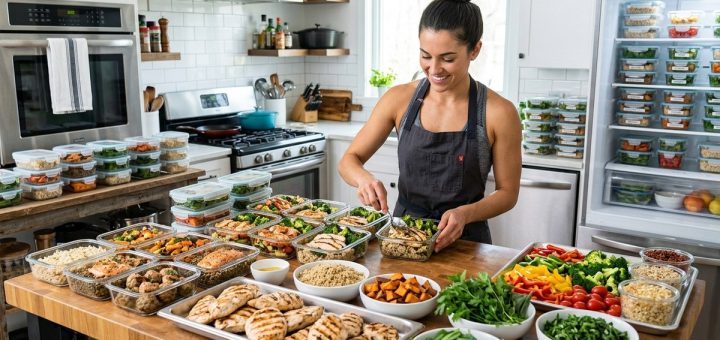
    That’s where post workout meal prep recipes become your best friend. Spend a few hours on Sunday, and you’ll have perfectly portioned, protein-packed meals ready to grab the moment you walk through the door after the gym.

    Key Takeaway

    Post workout meal prep recipes help you recover faster by ensuring you eat protein and carbs within the optimal window after training. Batch cooking five recipes on Sunday gives you ready-to-eat meals all week, eliminating decision fatigue and keeping your nutrition consistent. Each recipe focuses on lean protein, complex carbs, and nutrient-dense ingredients that support muscle repair and energy replenishment without complicated cooking techniques.

    Why Post Workout Meals Matter for Recovery

    Your body enters a unique metabolic state after training. Muscle glycogen stores are depleted. Muscle protein breakdown exceeds synthesis. Your body is primed to absorb nutrients and start the repair process.

    Eating the right combination of protein and carbohydrates within two hours of your workout maximizes recovery. Protein provides amino acids for muscle repair. Carbs replenish glycogen and trigger insulin release, which helps shuttle nutrients into muscle cells.

    Skip this meal, and you’re leaving gains on the table. But cooking from scratch after every workout? That’s not realistic for most people.

    Meal prep solves this problem. You cook once, eat multiple times, and never miss your post workout nutrition window.

    The Perfect Post Workout Meal Formula

    Every effective post workout meal contains three components:

    • Lean protein (20 to 40 grams depending on your size and goals)
    • Complex carbohydrates (30 to 60 grams to restore glycogen)
    • Vegetables or fruit (for micronutrients and fiber)

    The exact ratios depend on your training intensity and body composition goals. Someone doing heavy strength training needs more carbs than someone focused on fat loss with moderate lifting.

    But the formula stays the same. Protein rebuilds. Carbs refuel. Vegetables provide the vitamins and minerals that support both processes.

    “The post workout meal isn’t magic, but it’s the most important meal to get right if you’re training hard. Miss it consistently, and you’ll notice slower recovery, increased soreness, and stalled progress.” – Sports nutritionist recommendation

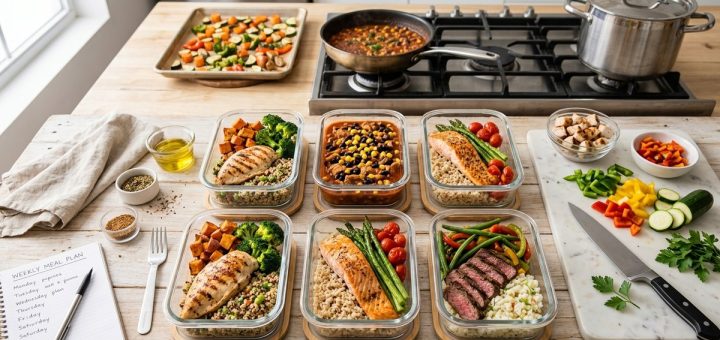
    Five Post Workout Meal Prep Recipes to Batch Cook

    These recipes are designed for efficiency. Each one makes four to six servings. They reheat well. And they hit the protein and carb targets your muscles need.

    1. Honey Garlic Chicken with Sweet Potato and Broccoli

    This is the workhorse of post workout meals. Simple. Delicious. Hits every macro you need.

    Ingredients:
    – 2 pounds chicken breast, cut into 1-inch pieces
    – 3 medium sweet potatoes, cubed
    – 4 cups broccoli florets
    – 3 tablespoons honey
    – 4 cloves garlic, minced
    – 2 tablespoons soy sauce (or coconut aminos)
    – 1 tablespoon olive oil
    – Salt and pepper to taste

    Instructions:

    1. Preheat oven to 425°F. Line two baking sheets with parchment paper.
    2. Toss sweet potato cubes with half the olive oil, salt, and pepper. Spread on one sheet.
    3. Mix chicken pieces with honey, garlic, soy sauce, and remaining oil. Spread on second sheet.
    4. Roast both sheets for 20 minutes.
    5. Add broccoli to the sweet potato sheet. Roast everything for another 10 minutes.
    6. Divide into meal prep containers. Each serving provides approximately 35g protein, 40g carbs.

    This recipe works beautifully because everything cooks at the same temperature. You’re not juggling multiple pans or cooking methods.

    2. Turkey and Quinoa Power Bowls

    Quinoa is a complete protein on its own. Pair it with lean ground turkey, and you’ve got a recovery powerhouse.

    Ingredients:
    – 1.5 pounds lean ground turkey (93/7)
    – 2 cups dry quinoa
    – 1 red bell pepper, diced
    – 1 yellow bell pepper, diced
    – 1 cup cherry tomatoes, halved
    – 1 cup corn (fresh or frozen)
    – 2 teaspoons cumin
    – 2 teaspoons chili powder
    – 1 teaspoon garlic powder
    – 4 cups chicken broth
    – Fresh cilantro for garnish

    Instructions:

    1. Cook quinoa in chicken broth according to package directions.
    2. While quinoa cooks, brown turkey in a large skillet over medium heat.
    3. Add bell peppers, tomatoes, corn, and spices to the turkey. Cook until vegetables soften, about 8 minutes.
    4. Combine cooked quinoa with turkey mixture.
    5. Portion into containers. Top with fresh cilantro before eating.

    Each serving delivers around 32g protein and 45g carbs. The combination of turkey and quinoa provides all nine essential amino acids your muscles need for repair.

    3. Salmon Teriyaki with Brown Rice and Snap Peas

    Fish often gets overlooked in meal prep because people worry it won’t reheat well. Salmon is the exception. It stays moist and flavorful for days.

    Ingredients:
    – 6 salmon fillets (4 to 6 ounces each)
    – 2 cups brown rice, uncooked
    – 3 cups snap peas
    – 1/4 cup teriyaki sauce (look for low-sugar versions)
    – 2 tablespoons rice vinegar
    – 1 tablespoon sesame oil
    – 2 teaspoons fresh ginger, grated
    – Sesame seeds for garnish

    Instructions:

    1. Cook brown rice according to package directions.
    2. Mix teriyaki sauce, rice vinegar, sesame oil, and ginger in a bowl.
    3. Place salmon fillets in a baking dish. Pour half the sauce over them.
    4. Bake at 400°F for 12 to 15 minutes until salmon flakes easily.
    5. Steam snap peas for 4 minutes.
    6. Assemble bowls with rice, salmon, and snap peas. Drizzle with remaining sauce.

    Salmon provides omega-3 fatty acids that reduce inflammation from training. Each serving contains about 38g protein and 42g carbs.

    If you’re looking for more ways to incorporate fish into your routine, what to cook when you have zero energy after the gym offers additional simple options.

    4. Beef and Vegetable Stir Fry with Jasmine Rice

    Beef provides creatine, iron, and B vitamins that support energy production and muscle function. This stir fry comes together fast and scales easily.

    Ingredients:
    – 1.5 pounds flank steak, thinly sliced
    – 2 cups jasmine rice, uncooked
    – 2 cups green beans, trimmed
    – 1 red onion, sliced
    – 2 carrots, julienned
    – 3 tablespoons soy sauce
    – 2 tablespoons oyster sauce
    – 1 tablespoon cornstarch
    – 2 teaspoons sesame oil
    – 3 cloves garlic, minced

    Instructions:

    1. Cook jasmine rice according to package directions.
    2. Mix soy sauce, oyster sauce, and cornstarch in a small bowl.
    3. Heat sesame oil in a large wok or skillet over high heat.
    4. Add beef in batches. Cook 2 to 3 minutes per batch. Remove and set aside.
    5. Add vegetables and garlic to the pan. Stir fry for 5 minutes.
    6. Return beef to pan. Add sauce mixture. Cook until sauce thickens, about 2 minutes.
    7. Serve over rice.

    Each portion provides approximately 36g protein and 48g carbs. The vegetables add fiber that helps stabilize blood sugar and keeps you full.

    For more stir fry variations, check out 10 healthy stir-fry recipes ready in 20 minutes or less.

    5. Greek Chicken Bowls with Orzo and Roasted Vegetables

    Mediterranean flavors make meal prep feel less like a chore and more like something you’d order at a restaurant.

    Ingredients:
    – 2 pounds chicken thighs, boneless and skinless
    – 2 cups orzo pasta
    – 2 zucchini, sliced
    – 1 red onion, cut into wedges
    – 1 cup cherry tomatoes
    – 1/2 cup kalamata olives, sliced
    – 1/4 cup feta cheese, crumbled
    – 3 tablespoons olive oil
    – 2 tablespoons lemon juice
    – 2 teaspoons dried oregano
    – 1 teaspoon garlic powder

    Instructions:

    1. Preheat oven to 425°F.
    2. Toss zucchini, onion, and tomatoes with 2 tablespoons olive oil, oregano, and garlic powder. Spread on a baking sheet.
    3. Season chicken thighs with salt, pepper, and remaining olive oil. Place on a second baking sheet.
    4. Roast both sheets for 25 to 30 minutes.
    5. Cook orzo according to package directions. Drain and toss with lemon juice.
    6. Slice chicken. Assemble bowls with orzo, chicken, roasted vegetables, olives, and feta.

    Chicken thighs stay moister than breasts during reheating. Each serving contains about 34g protein and 44g carbs.

    Meal Prep Strategy for Maximum Efficiency

    Cooking five recipes might sound overwhelming. But with the right approach, you can knock out a week’s worth of meals in three hours.

    Here’s the step-by-step process:

    1. Shop on Saturday. Make a detailed list. Buy everything you need in one trip.
    2. Prep ingredients first. Wash and chop all vegetables. Measure out spices. Cook all grains.
    3. Use your oven strategically. Multiple recipes can cook simultaneously at similar temperatures.
    4. Work in batches. While one protein cooks, prep the next recipe’s vegetables.
    5. Let everything cool before portioning. Hot food creates condensation in containers, which leads to soggy meals.
    6. Label containers with dates. Most meals stay fresh for four to five days in the fridge.

    The sunday meal prep blueprint: 3 hours to a week of clean eating success walks through this process in detail.

    Storage and Reheating Best Practices

    Even the best recipe falls flat if it turns into a mushy mess by Wednesday. Proper storage makes all the difference.

    Storage Method Best For How Long It Lasts
    Glass containers in fridge Meals you’ll eat within 4 days 4 to 5 days
    Plastic containers in fridge Budget-friendly option 3 to 4 days
    Freezer bags (flat) Meals for week 2 2 to 3 months
    Vacuum-sealed portions Maximum freshness 3 to 4 months

    Reheating tips:
    – Add a tablespoon of water to rice or grain bowls before microwaving. This creates steam and prevents drying.
    – Reheat fish at 50% power for twice as long. High heat makes it rubbery.
    – Store sauces separately when possible. Add them after reheating.
    – Let frozen meals thaw in the fridge overnight before reheating.

    Understanding why your meal prep goes bad after 3 days (and how to fix it) can save you from wasting food and money.

    Common Meal Prep Mistakes to Avoid

    Most people make the same errors when they start meal prepping. Here’s what to watch out for:

    Mistake 1: Making too many different recipes
    Stick to three to five recipes max. More variety sounds appealing, but it makes shopping and cooking chaotic.

    Mistake 2: Underseasoning food
    Food loses flavor as it sits. Season more aggressively than you would for a fresh meal.

    Mistake 3: Overcooking proteins
    Remember that reheating adds more cooking time. Pull chicken at 160°F instead of 165°F. It will reach safe temperature during reheating.

    Mistake 4: Ignoring texture
    Some foods don’t reheat well. Crispy items get soggy. Delicate greens wilt. Choose recipes designed for meal prep.

    Mistake 5: Not investing in quality containers
    Cheap containers leak, stain, and warp. Good glass containers last for years and keep food fresher.

    Customizing Recipes for Your Goals

    These base recipes work for most people, but you might need to adjust portions based on your specific goals.

    For muscle gain:
    – Increase portion sizes by 25 to 30%
    – Add an extra serving of complex carbs
    – Include a handful of nuts or avocado for healthy fats
    – Target 40 to 50g protein per meal

    For fat loss:
    – Reduce carb portions by one-third
    – Double the vegetable portions
    – Keep protein portions the same
    – Add extra fiber to increase satiety

    For endurance athletes:
    – Increase carb portions significantly
    – Add fruit to meals for simple sugars
    – Include electrolyte-rich vegetables like spinach and beets
    – Don’t skimp on salt

    The principles in how to calculate your macros for fat loss and muscle gain help you dial in the exact numbers for your situation.

    Budget-Friendly Protein Sources

    Post workout meals don’t require expensive cuts of meat. These protein sources deliver results without destroying your budget:

    • Chicken thighs cost half as much as breasts and taste better reheated
    • Ground turkey is versatile and usually on sale
    • Canned tuna provides 25g protein for less than a dollar per can
    • Eggs remain one of the cheapest complete proteins
    • Greek yogurt works for breakfast meal prep at minimal cost
    • Cottage cheese delivers casein protein that digests slowly

    Buying in bulk and freezing portions saves even more. A whole pork loin costs less per pound than pre-cut chops. You can portion it yourself and freeze what you won’t use immediately.

    For a complete approach to eating well on a budget, 5-day muscle building meal prep on a budget: complete shopping list included provides a full framework.

    Quick Protein Additions When You Need More

    Sometimes you need extra protein to hit your daily targets. These additions take seconds and boost any meal:

    • Grilled chicken breast strips (keep pre-cooked in the fridge)
    • Hard-boiled eggs (make a dozen on Sunday)
    • Cottage cheese mixed into grain bowls
    • Edamame sprinkled on top
    • Sliced turkey deli meat rolled up
    • Protein powder mixed into sauces or dressings

    The how to meal prep 150g protein daily without getting bored guide shows you how to mix and match proteins throughout the day.

    Making Meal Prep Work with Your Schedule

    Not everyone can dedicate Sunday afternoon to cooking. Here are alternative approaches:

    The two-session method: Prep proteins on Sunday. Prep carbs and vegetables on Wednesday. This keeps food fresher and breaks up the work.

    The freezer-first approach: Make double batches. Eat half this week. Freeze half for later. You’ll build a rotation of meals without cooking every week.

    The minimalist method: Pick one protein, one carb, one vegetable. Make large batches of each. Mix and match throughout the week with different sauces and seasonings.

    The hybrid approach: Meal prep dinners only. Handle breakfast and lunch with simpler options like 10 high protein breakfast recipes ready in under 10 minutes.

    The Nutrient Timing Window Debate

    You’ll hear conflicting advice about how soon you need to eat after training. Some sources say you have a 30-minute window. Others claim timing doesn’t matter at all.

    The truth sits in the middle. The anabolic window is real, but it’s wider than you think. Research shows benefits from eating within two hours of training. But if you ate a meal two hours before your workout, you have even more flexibility.

    What matters most is total daily protein intake and consistency. Getting 0.7 to 1 gram of protein per pound of body weight every day trumps perfect timing.

    That said, having a meal ready to eat when you get home removes barriers. You won’t skip it because you’re tired or busy.

    For a deeper understanding, the ultimate guide to post-workout nutrition: what to eat and when covers the science in detail.

    Tools That Make Meal Prep Easier

    You don’t need fancy equipment, but a few key tools speed up the process:

    • Glass meal prep containers with compartments keep foods separated
    • A sharp chef’s knife cuts prep time in half
    • Sheet pans (at least two) let you cook multiple things at once
    • A rice cooker frees up stovetop space and cooks perfect grains every time
    • A food scale ensures portion accuracy
    • Silicone baking mats eliminate sticking and make cleanup easier

    The investment pays off when meal prep becomes easier and faster each week.

    Your First Week of Post Workout Meal Prep

    If you’re new to this, start simple. Pick three recipes from this list. Make four servings of each. That gives you 12 meals.

    Eat one after every workout. Use the extras for regular dinners. You don’t have to eat meal prep for every single meal to see benefits.

    As you get comfortable with the process, add more recipes. Experiment with different proteins and flavor profiles. Build a rotation of go-to meals that you actually enjoy eating.

    The goal isn’t perfection. It’s consistency. Having food ready when you need it beats scrambling to figure out what to eat or defaulting to less nutritious options.

    Making Recovery Meals Work for You

    Post workout nutrition doesn’t have to be complicated. These five recipes give you a solid foundation. They’re built on proven ratios of protein and carbs. They reheat well. And they taste good enough that you’ll actually eat them.

    The real magic happens when meal prep becomes a habit. You’ll stop thinking about what to eat after the gym. You’ll stop missing your nutrition window because cooking feels like too much work. And you’ll start seeing the recovery and performance benefits of consistent, quality nutrition.

    Start with one recipe this Sunday. Master it. Then add another. Before long, you’ll have a system that supports your training without taking over your life.

  • 15 Clean Eating Pantry Staples Every Health-Conscious Cook Needs

    Your fridge might be empty, but that doesn’t mean dinner has to be boring or unhealthy. A well-stocked pantry is your secret weapon for throwing together balanced meals without running to the store every other day. When you have the right ingredients on hand, eating well becomes less about willpower and more about convenience.

    Key Takeaway

    Healthy pantry staples form the foundation of stress-free meal planning. Stock versatile ingredients like whole grains, canned beans, nuts, quality oils, and spices to build nutritious meals without constant grocery runs. A strategic pantry saves time, money, and eliminates the temptation of takeout when fresh ingredients run low. Focus on shelf-stable items that support your wellness goals and actually get used in your weekly rotation.

    Why Your Pantry Matters More Than Your Fridge

    Most people obsess over filling their refrigerator with fresh produce and lean proteins. That’s great, but those items spoil fast.

    Your pantry, on the other hand, holds ingredients that last weeks or months. These items become your backup plan when life gets chaotic. No time to shop? Pantry. Too tired to cook something elaborate? Pantry. Unexpected guest for dinner? You guessed it.

    The right pantry setup means you’re always one step away from a decent meal. It reduces food waste because you’re not watching fresh ingredients turn into science experiments. It cuts down on impulse takeout orders. And it makes building a clean eating meal plan that actually fits your macros significantly easier.

    How to Think About Pantry Categories

    Before we get into specific items, let’s organize your thinking. A functional pantry isn’t just a random collection of cans and boxes.

    Group your staples into these categories:

    • Proteins: Canned fish, beans, lentils, nut butters
    • Grains and starches: Rice, quinoa, oats, whole grain pasta
    • Healthy fats: Oils, nuts, seeds
    • Flavor builders: Spices, vinegars, sauces, broths
    • Quick additions: Canned tomatoes, coconut milk, dried fruit

    Each category plays a role in creating balanced meals. Proteins keep you full. Grains provide sustained energy. Fats support hormone production and nutrient absorption. Flavor builders make everything taste better so you actually want to eat your healthy food.

    The Essential Healthy Pantry Staples List

    Here are the items that earn permanent spots in a health-focused kitchen.

    1. Canned Beans and Lentils

    Beans are cheap, protein-packed, and ridiculously versatile. A can of black beans can become taco filling, salad topping, or the base of a veggie burger.

    Lentils cook faster than dried beans and work in soups, curries, or grain bowls. Stock multiple varieties. Black beans, chickpeas, and cannellini beans each bring different textures and flavors.

    Rinse canned beans before using to reduce sodium content by up to 40%.

    2. Whole Grains

    White rice is fine, but whole grains offer more fiber and nutrients. Brown rice, quinoa, farro, and bulgur all store well and cook up in 15 to 45 minutes.

    Quinoa is technically a seed but cooks like a grain. It contains all nine essential amino acids, making it a complete protein. That’s rare for plant foods.

    Oats deserve special mention. Rolled oats work for breakfast, baking, and even savory dishes. They’re budget-friendly and support heart health.

    If you’re prepping meals for the week, cook grains in batches and store them in the fridge for up to five days.

    3. Canned Tomatoes

    A can of crushed tomatoes can become pasta sauce, curry base, chili, or soup starter. Tomatoes are rich in lycopene, an antioxidant linked to reduced inflammation.

    Buy varieties without added sugar. Check the ingredient list. It should say tomatoes, maybe salt, and that’s it.

    Diced tomatoes work for chunkier dishes. Tomato paste adds concentrated flavor to sauces and stews.

    4. Quality Cooking Oils

    Extra virgin olive oil is your workhorse. Use it for sautéing at medium heat, salad dressings, and finishing dishes.

    For high-heat cooking, avocado oil has a higher smoke point. Coconut oil works well in certain baked goods and adds a subtle sweetness to stir-fries.

    Store oils in a cool, dark place. Light and heat degrade quality and flavor.

    5. Nuts and Seeds

    Raw almonds, walnuts, cashews, pumpkin seeds, and sunflower seeds provide healthy fats, protein, and minerals. They’re perfect for snacking or adding crunch to salads and grain bowls.

    Buy raw and unsalted versions. You can always toast them yourself and control the seasoning.

    Chia seeds and flaxseeds are tiny but mighty. They add omega-3s and fiber to smoothies, oatmeal, and baked goods. Grind flaxseeds before eating to improve nutrient absorption.

    6. Nut and Seed Butters

    Natural peanut butter, almond butter, and tahini (sesame seed butter) are pantry MVPs. They work in sauces, dressings, smoothies, and as simple protein sources.

    Look for versions with one ingredient: nuts or seeds. No added oils, sugars, or stabilizers needed.

    Tahini is especially useful in savory cooking. It’s the base of hummus and adds creaminess to dressings and marinades.

    7. Canned Fish

    Tuna, salmon, sardines, and mackerel offer convenient protein and omega-3 fatty acids. They’re shelf-stable for years and cost less than fresh fish.

    Wild-caught is preferable when available. Check labels for sustainably sourced options.

    Sardines might seem intimidating, but they’re nutrient-dense and work well mashed into pasta, spread on toast, or mixed into salads.

    8. Vinegars

    Apple cider vinegar, balsamic vinegar, and rice vinegar each bring distinct flavors. Vinegars brighten dishes, balance richness, and work as the acid component in dressings.

    Apple cider vinegar with the “mother” contains beneficial bacteria and enzymes. Some people use it in wellness routines, though cooking with it works just fine too.

    9. Spices and Dried Herbs

    A basic spice collection transforms bland food into something you actually crave. Start with these:

    • Garlic powder
    • Onion powder
    • Cumin
    • Paprika
    • Chili powder
    • Oregano
    • Basil
    • Black pepper
    • Sea salt

    Buy small quantities at first. Spices lose potency after six months to a year. Write purchase dates on jars to track freshness.

    Turmeric and cinnamon also deserve spots. Turmeric contains curcumin, studied for anti-inflammatory properties. Cinnamon helps regulate blood sugar.

    10. Broths and Stocks

    Low-sodium chicken, beef, and vegetable broths add depth to grains, soups, and sauces. They’re better than water for cooking quinoa or rice.

    Bone broth offers additional collagen and minerals. It’s pricier but some people find it worth the cost for joint and gut health benefits.

    Look for brands without MSG or added sugars. Or make your own and freeze it in portions.

    11. Whole Grain Pasta

    Regular pasta isn’t evil, but whole grain versions provide more fiber and protein. They keep you satisfied longer.

    Chickpea pasta and lentil pasta are higher in protein than wheat-based options. They work well for anyone tracking macros or following a high-protein meal prep plan.

    Cook pasta al dente. It has a lower glycemic index that way, meaning steadier blood sugar levels.

    12. Honey and Maple Syrup

    Natural sweeteners have a place in a healthy pantry. Use them sparingly in dressings, marinades, or baked goods.

    Raw honey contains enzymes and antioxidants. Pure maple syrup provides minerals like manganese and zinc.

    Avoid products labeled “pancake syrup” or “honey-flavored.” Those are mostly corn syrup with additives.

    13. Coconut Milk

    Full-fat canned coconut milk adds creaminess to curries, soups, and smoothies without dairy. It’s rich in medium-chain triglycerides, a type of fat your body processes differently than other fats.

    Shake the can before opening. The cream separates from the liquid during storage.

    Light coconut milk works if you want fewer calories, but the full-fat version provides better texture and satiety.

    14. Dried Fruit

    Dates, raisins, apricots, and figs offer natural sweetness and work as energy-dense snacks. They’re useful in baking or chopped into oatmeal.

    Buy unsweetened versions. Dried fruit already concentrates the natural sugars. No need for added sweeteners.

    Portion control matters here. A small handful goes a long way calorie-wise.

    15. Nutritional Yeast

    This deactivated yeast has a cheesy, nutty flavor. It’s popular in plant-based cooking but useful for anyone wanting to reduce dairy.

    Sprinkle it on popcorn, pasta, or roasted vegetables. It’s also a source of B vitamins, especially B12 in fortified versions.

    Building Meals From Your Pantry

    Having ingredients is one thing. Knowing how to combine them is another.

    Follow this simple framework:

    1. Start with a base: Choose a grain, legume, or pasta.
    2. Add protein: Use canned fish, beans, or eggs if you have them.
    3. Include vegetables: Fresh, frozen, or canned all work.
    4. Add healthy fat: Drizzle oil, sprinkle nuts, or add avocado.
    5. Season generously: Use spices, herbs, vinegar, and citrus.

    Here’s a real example. You have brown rice, canned chickpeas, canned tomatoes, spinach, olive oil, and cumin.

    Cook the rice. Sauté chickpeas with cumin and garlic powder. Add tomatoes and simmer. Stir in spinach until wilted. Drizzle with olive oil. Done.

    That meal took 20 minutes and hit protein, carbs, fats, and vegetables. No recipe required.

    Storage Tips That Actually Matter

    Buying the right foods means nothing if they go bad before you use them.

    Storage Location Best Items Why
    Cool, dark cabinet Oils, grains, pasta, canned goods Prevents rancidity and nutrient loss
    Airtight containers Nuts, seeds, flour, oats Keeps out moisture and pests
    Refrigerator Opened nut butters, flaxseed meal Extends freshness after opening
    Freezer Extra nuts, whole grain flour Prevents oils from going rancid

    Transfer bulk items into glass jars or BPA-free containers. Label everything with purchase dates. Rotate stock so older items get used first.

    Whole grains and nuts contain oils that can turn rancid. If something smells off or tastes bitter, toss it.

    Common Pantry Mistakes to Avoid

    Even experienced cooks make these errors.

    Buying too much at once. Start with smaller quantities of new items. Make sure you actually use them before committing to bulk sizes.

    Ignoring expiration dates. Canned goods last years, but they do eventually degrade in quality. Check dates when organizing.

    Storing everything in original packaging. Cardboard boxes and thin plastic bags invite pests. Transfer to sealed containers.

    Forgetting about what you have. Do a pantry inventory every month. Use items before they expire. Plan meals around what needs to get used.

    Skipping variety. Don’t buy five cans of the same bean. Mix it up so you don’t get bored.

    “A well-organized pantry isn’t about having everything. It’s about having the right things in the right amounts. Stock what you actually cook, not what you think you should cook.”

    Pantry Staples for Different Eating Styles

    Your specific goals might require tweaking this list.

    For muscle building: Add protein powder, canned chicken, extra nut butters, and higher quantities of beans. Check out muscle building meal prep on a budget for more ideas.

    For low carb eating: Focus on nuts, seeds, canned fish, oils, and low-carb vegetables like canned green beans. Skip the grains and dried fruit. Building the perfect low carb plate becomes easier with the right pantry.

    For plant-based diets: Stock multiple types of beans, lentils, nutritional yeast, tahini, and plant-based protein sources. Variety prevents nutrient gaps.

    For budget-conscious cooking: Prioritize dried beans over canned, buy spices in bulk, and choose store brands for basics like rice and oats.

    How to Stock Your Pantry Without Overspending

    You don’t need to buy everything at once. That’s overwhelming and expensive.

    Follow this approach:

    1. Week one: Buy five core items (rice, beans, olive oil, canned tomatoes, spices).
    2. Week two: Add five more (oats, nuts, pasta, vinegar, broth).
    3. Week three: Fill in remaining items based on what you’ve actually cooked.
    4. Week four: Restock items you’ve used and add any extras you realized you need.

    Buy sale items in bulk only if you know you’ll use them. A great deal on something that sits unused for two years isn’t actually a deal.

    Generic or store brands work fine for most pantry staples. You’re paying for the product, not the marketing.

    Keeping Your Pantry Meal-Prep Ready

    If you’re someone who preps meals on Sundays, your pantry supports that routine.

    Cook grains in large batches. Make a big pot of beans. Prep sauces using canned tomatoes, broth, and spices. These become mix-and-match components throughout the week.

    One-pan meal prep recipes often rely on pantry staples combined with whatever fresh ingredients you have. The pantry provides the base. Fresh items add variety.

    Understanding why some meal prep goes bad after three days helps you choose pantry items that store well and reheat properly.

    Your Pantry as a Wellness Tool

    Healthy eating isn’t about perfection. It’s about making better choices more often.

    A stocked pantry removes barriers. You can’t claim there’s nothing to eat when you have 15 versatile ingredients waiting. You can’t justify expensive takeout when a decent meal is 20 minutes away.

    This setup supports consistency. And consistency beats intensity every time when it comes to long-term health changes.

    Start small. Pick five items from this list. Buy them this week. Use them in at least two meals. Then add five more.

    Before you know it, you’ll have a kitchen that works for you instead of against you. Your pantry becomes the foundation that makes eating well feel effortless, even on your most chaotic days.

  • 15 High-Protein Post-Workout Snacks You Can Make in Under 10 Minutes

    You just crushed your training session. Sweat dripping. Muscles pumped. Energy depleted.

    Now comes the part most people mess up: refueling properly.

    Your body has about 30 to 60 minutes when it’s primed to absorb nutrients and kickstart recovery. Miss this window with poor food choices, and you’re leaving gains on the table.

    Key Takeaway

    High protein snacks after workout should deliver 15 to 30 grams of protein within an hour of training. Combine protein with simple carbs to replenish glycogen and trigger muscle repair. The best options require minimal prep, taste good, and contain complete amino acid profiles. Skip the processed bars and make real food work for your schedule instead.

    Why Protein Timing Actually Matters for Recovery

    Your muscles don’t grow during workouts.

    They grow during recovery.

    When you train, you create micro-tears in muscle fibers. Protein provides the amino acids needed to repair these tears and build them back stronger.

    Research shows consuming protein within the post-workout window maximizes muscle protein synthesis. This is the process where your body uses amino acids to rebuild damaged tissue.

    But here’s what most fitness articles won’t tell you: the type of protein matters just as much as timing.

    Complete proteins contain all nine essential amino acids your body can’t produce on its own. Animal sources like eggs, dairy, and meat are complete. Most plant proteins need to be combined to provide the full spectrum.

    “Aim for 0.25 to 0.40 grams of protein per kilogram of body weight immediately after training. For a 180-pound person, that’s roughly 20 to 33 grams.” – International Society of Sports Nutrition

    Pairing protein with carbohydrates also speeds recovery. Carbs replenish glycogen stores and trigger insulin release, which helps shuttle amino acids into muscle cells faster.

    What Makes a Post-Workout Snack Actually Work

    Not all protein snacks are created equal.

    Some take too long to digest. Others lack the nutrients your body needs most after training.

    Here’s what separates effective recovery snacks from wasted calories:

    • Digestibility: Your stomach shouldn’t feel like a brick. Choose foods that digest easily.
    • Protein quality: Complete proteins beat incomplete ones for muscle repair.
    • Carb-to-protein ratio: Aim for 2:1 or 3:1 carbs to protein for endurance work, 1:1 for strength training.
    • Minimal prep time: If it takes 30 minutes to make, you’ve already missed the optimal window.
    • Portability: The best snack is the one you’ll actually eat, even when you’re tired.

    The science backs this up. A 2017 study in the Journal of the International Society of Sports Nutrition found that consuming 20 grams of protein after resistance training significantly increased muscle protein synthesis compared to no protein intake.

    Your body can only process about 20 to 40 grams of protein per meal for muscle building. More than that, and you’re just creating expensive urine.

    The Best High Protein Snacks After Workout You Can Make Fast

    Let’s get practical.

    These options deliver the protein your muscles need without requiring a culinary degree or an hour in the kitchen.

    Greek Yogurt Power Bowl

    Mix one cup of plain Greek yogurt with a handful of berries and a tablespoon of honey.

    Protein: 20 grams. Carbs: 35 grams. Time: 2 minutes.

    Greek yogurt contains casein and whey, two proteins that digest at different rates. This gives you both immediate and sustained amino acid delivery.

    Add granola for extra carbs if you did intense cardio. Skip it if you’re watching calories.

    Cottage Cheese and Fruit Combo

    Scoop one cup of cottage cheese into a bowl. Top with sliced peaches or pineapple.

    Protein: 25 grams. Carbs: 20 grams. Time: 90 seconds.

    Cottage cheese is criminally underrated. It’s packed with casein protein, which digests slowly and feeds your muscles for hours.

    The fruit adds natural sugars to spike insulin and drive nutrients into cells.

    Turkey and Avocado Roll-Ups

    Take four slices of deli turkey. Spread mashed avocado on each. Roll them up.

    Protein: 24 grams. Healthy fats: 15 grams. Time: 3 minutes.

    This option works great for low-carb athletes. The healthy fats from avocado support hormone production and reduce inflammation.

    Add a piece of fruit if you need carbs after a glycogen-depleting session.

    Protein Smoothie Done Right

    Blend one scoop of protein powder, one banana, one cup of milk, and a handful of spinach.

    Protein: 30 grams. Carbs: 40 grams. Time: 4 minutes.

    Liquid nutrition digests faster than solid food. Your muscles get amino acids within 20 to 30 minutes.

    Use whey protein for fastest absorption. Casein protein if you want slower, sustained release.

    Frozen fruit makes it taste like a milkshake without added sugar.

    Hard-Boiled Eggs and Rice Cakes

    Eat three hard-boiled eggs with two rice cakes topped with almond butter.

    Protein: 21 grams. Carbs: 30 grams. Time: 0 minutes if you prep eggs ahead.

    Eggs contain the highest quality protein available. They score 100 on the biological value scale.

    Prep a dozen eggs on Sunday. Grab them throughout the week. This is how meal prep actually works in real life, similar to strategies in how to meal prep an entire week of lunches in under 2 hours.

    Tuna Salad on Whole Grain Crackers

    Mix one can of tuna with a tablespoon of Greek yogurt instead of mayo. Spread on whole grain crackers.

    Protein: 26 grams. Carbs: 24 grams. Time: 3 minutes.

    Tuna provides complete protein plus omega-3 fatty acids that reduce exercise-induced inflammation.

    Using Greek yogurt instead of mayonnaise cuts calories and adds extra protein.

    Chocolate Milk and Almonds

    Drink one cup of chocolate milk. Eat a small handful of almonds.

    Protein: 12 grams. Carbs: 30 grams. Time: 30 seconds.

    Don’t laugh. Multiple studies show chocolate milk rivals expensive recovery drinks for post-workout nutrition.

    The 4:1 carb-to-protein ratio is perfect for endurance athletes. The almonds add healthy fats and extra protein.

    Protein Pancakes Made Simple

    Mix one scoop of protein powder, one egg, and half a mashed banana. Cook like regular pancakes.

    Protein: 28 grams. Carbs: 25 grams. Time: 6 minutes.

    This feels like a treat but delivers serious nutrition. Top with berries instead of syrup to keep sugar in check.

    Make a batch on Sunday. Reheat throughout the week for grab-and-go convenience.

    Edamame and String Cheese

    Steam one cup of edamame. Pair with two string cheese sticks.

    Protein: 23 grams. Carbs: 15 grams. Time: 5 minutes.

    Edamame is a complete plant protein, rare among vegetarian options. Combined with dairy, you get diverse amino acid sources.

    This combo works great for vegetarians who want plant-based protein meals for muscle gain.

    Peanut Butter Banana Wrap

    Spread two tablespoons of peanut butter on a whole wheat tortilla. Add sliced banana. Roll it up.

    Protein: 16 grams. Carbs: 45 grams. Time: 2 minutes.

    The high carb content makes this ideal after long runs or intense cardio sessions.

    Peanut butter provides protein plus healthy fats that slow digestion and keep you satisfied longer.

    How to Prep Your Week of Post-Workout Snacks in One Session

    Consistency beats perfection.

    Having snacks ready to grab makes the difference between eating properly and hitting the drive-through.

    Here’s a simple prep routine:

    1. Sunday morning: Hard-boil a dozen eggs. Store them in the fridge with shells on.
    2. While eggs cook: Portion Greek yogurt into individual containers. Add berries to half of them.
    3. After eggs finish: Make a batch of protein pancakes. Stack them with parchment paper between each one. Freeze.
    4. Final step: Prep snack bags with measured portions of almonds, edamame, and crackers.

    Total time: 45 minutes. Snacks ready: 20 to 25 servings.

    This approach follows the same principles as the ultimate macro-friendly freezer meal prep guide for beginners.

    Common Mistakes That Sabotage Post-Workout Nutrition

    You’re training hard. Don’t waste it with these errors.

    Mistake Why It Hurts Better Approach
    Waiting too long to eat Muscle protein synthesis peaks within 60 minutes Pack snacks in your gym bag
    Only eating protein Without carbs, your body may break down muscle for energy Combine protein with simple carbs
    Choosing processed bars Most contain more sugar than protein Make real food work instead
    Inconsistent timing Your body adapts to regular feeding schedules Eat at the same time after each workout
    Skipping post-workout food entirely You lose the prime recovery window Even a small snack beats nothing

    The biggest mistake? Thinking you need expensive supplements.

    Whole foods deliver better nutrition at a fraction of the cost. Save your money for quality ingredients instead of proprietary blends with unpronounceable ingredients.

    If you’re serious about hitting your protein targets consistently, check out how to meal prep 150g protein daily without getting bored.

    Adjusting Protein Intake Based on Your Training Style

    Not all workouts demand the same recovery nutrition.

    Your snack should match your training intensity and goals.

    After strength training: Focus on protein. Your muscles need amino acids to repair and grow. Aim for 25 to 30 grams of protein with moderate carbs.

    After cardio: Prioritize carbs with protein. Long runs or bike rides deplete glycogen stores. Use a 3:1 or 4:1 carb-to-protein ratio.

    After HIIT: Split the difference. High-intensity interval training taxes both systems. Aim for equal parts protein and carbs.

    Rest days: You still need protein for ongoing muscle repair, but you can reduce overall calories. Lower-carb options like turkey roll-ups work well.

    Your body weight also matters. Heavier athletes need more absolute protein, but the ratio stays similar.

    A 150-pound person might need 20 grams post-workout. A 220-pound person might need 30 grams. Both are getting roughly 0.15 grams per pound of body weight.

    Understanding how much protein do you really need after a workout helps you dial in your specific needs.

    Budget-Friendly Options That Don’t Sacrifice Quality

    Quality protein doesn’t require a premium budget.

    Some of the best sources cost less than fancy protein bars.

    Eggs average about 25 cents each. That’s 6 grams of perfect protein for a quarter.

    Canned tuna runs around $1 per can. You get 25 grams of protein for less than the cost of a coffee.

    Greek yogurt in large tubs costs half as much per serving compared to individual cups.

    Buying whole chickens and cooking them yourself cuts protein costs by 40% compared to deli meat.

    Dried beans and lentils provide plant protein for pennies per serving.

    The strategies in 5-day muscle building meal prep on a budget apply equally to snack prep.

    Smart shopping beats expensive supplements every time.

    Plant-Based Protein Options for Vegetarian Athletes

    You don’t need meat to build muscle.

    You just need to be more strategic about protein sources.

    Tempeh and hummus: Slice tempeh and pan-fry until crispy. Dip in hummus. Protein: 22 grams.

    Protein smoothie with hemp seeds: Blend plant protein powder, banana, almond milk, and two tablespoons of hemp seeds. Protein: 28 grams.

    Lentil salad: Mix cooked lentils with diced vegetables and tahini dressing. Protein: 18 grams per cup.

    Tofu scramble: Crumble firm tofu and cook with vegetables and turmeric. Protein: 20 grams.

    Quinoa bowl: Cook quinoa and top with black beans, avocado, and nutritional yeast. Protein: 24 grams.

    The key with plant proteins is combining different sources to get all essential amino acids. Beans plus grains create a complete protein profile.

    Making Your Snacks Taste Good Enough to Stick With

    Nutrition only works if you actually eat it.

    Bland chicken and plain rice might hit your macros, but if you hate eating it, you won’t stay consistent.

    Season your food. Herbs and spices add zero calories but make everything taste better.

    Try cinnamon in Greek yogurt. Garlic powder on eggs. Everything bagel seasoning on cottage cheese.

    Texture matters too. Crunchy elements like nuts or granola make soft foods more satisfying.

    Temperature changes things. Cold smoothies hit different than room-temperature protein shakes.

    Variety prevents boredom. Rotate through different snack options instead of eating the same thing daily.

    If you’re stuck in a food rut, 30 high protein snacks that actually taste like treats offers more creative options.

    The best nutrition plan is the one you can maintain for months, not just weeks.

    Portable Options for Athletes Who Train Away From Home

    Your gym bag should function like a mobile kitchen.

    Pack these items for reliable post-workout nutrition anywhere:

    • Individual protein powder packets
    • Shelf-stable almond milk boxes
    • Nut butter squeeze packs
    • Beef or turkey jerky
    • Dry-roasted edamame
    • Protein bars you’ve vetted for quality
    • Small shaker bottle

    Keep a cooler in your car with ice packs. This expands your options to include:

    • Pre-made protein shakes
    • Hard-boiled eggs
    • String cheese
    • Greek yogurt cups
    • Turkey roll-ups

    The goal is removing barriers between you and proper nutrition.

    When eating right requires zero extra effort, consistency becomes automatic.

    Storage Tips That Keep Your Prep Fresh All Week

    Nothing kills meal prep motivation faster than food going bad on day three.

    Proper storage extends shelf life and maintains food quality.

    Hard-boiled eggs: Keep shells on until you eat them. They last seven days refrigerated.

    Greek yogurt: Store in original container until portioning. Once opened, use within five days.

    Cooked chicken: Slice and store in airtight containers. Use within four days or freeze.

    Protein pancakes: Layer with parchment paper and freeze. They last three months.

    Cut fruit: Store in containers with paper towels to absorb excess moisture. Use within three days.

    Smoothie packs: Pre-portion ingredients in freezer bags. Dump and blend when ready.

    Understanding why your meal prep goes bad after 3 days and how to fix it helps you avoid common preservation mistakes.

    Invest in quality containers with tight seals. Glass containers maintain temperature better than plastic.

    Label everything with prep dates. Your future self will thank you.

    Supplements vs Real Food for Post-Workout Recovery

    Protein powder has its place.

    But it shouldn’t replace whole foods as your primary recovery strategy.

    Real food provides nutrients supplements can’t match. Vitamins, minerals, fiber, and phytonutrients all support recovery in ways isolated protein doesn’t.

    Whole foods also trigger greater satiety. You feel fuller longer compared to drinking a shake.

    That said, protein powder offers convenience when you’re short on time or appetite.

    Use it strategically:

    • When you can’t stomach solid food immediately after intense training
    • When you need to hit protein targets but you’re already full
    • When you’re traveling and food options are limited
    • When you need fast-digesting protein before bed isn’t practical

    Choose whey isolate for fastest absorption. Casein for slow overnight release. Plant blends if you’re dairy-free.

    Skip proprietary blends with mystery ingredients. Look for products with minimal additives and third-party testing.

    The supplement industry wants you to believe you need their products to build muscle. You don’t. You need consistent protein intake from quality sources, whether that’s chicken or powder.

    Building Snacks That Support Your Specific Fitness Goals

    Different goals require different nutritional approaches.

    Fat loss: Prioritize protein to preserve muscle while in a calorie deficit. Keep carbs moderate. Try turkey roll-ups or cottage cheese with vegetables.

    Muscle gain: Increase both protein and carbs to support growth. Your body needs a calorie surplus. Protein pancakes or smoothies with banana work well.

    Endurance training: Emphasize carbs to replenish depleted glycogen. Chocolate milk or peanut butter banana wraps fit this goal.

    General fitness: Balanced options work fine. Greek yogurt bowls or eggs with rice cakes cover your bases.

    Your post-workout snack should align with your overall nutrition strategy, not contradict it.

    If you’re following a low-carb approach for fat loss, don’t sabotage it with high-carb recovery snacks. Options in 30 low carb meal prep recipes that actually keep you full all week can guide your choices.

    Hydration Paired With Protein for Optimal Recovery

    Protein gets all the attention.

    Water deserves equal respect.

    Dehydration impairs muscle protein synthesis. Your body can’t effectively use the protein you’re eating if you’re not properly hydrated.

    During exercise, you lose water through sweat. This reduces blood volume and makes it harder to deliver nutrients to muscles.

    Aim to drink 16 to 24 ounces of water with your post-workout snack.

    Add a pinch of salt if you trained intensely or in heat. Sodium helps your body retain fluids and restore electrolyte balance.

    Skip sugary sports drinks unless you did truly intense cardio for over 90 minutes. Most people don’t need the extra calories.

    Plain water works fine for typical strength training sessions.

    Monitor your urine color. Pale yellow means you’re hydrated. Dark yellow means drink more.

    Your Recovery Starts the Moment You Finish Training

    The weights are back on the rack. Your workout is done.

    But your results aren’t determined yet.

    What you eat in the next hour influences whether today’s training builds muscle or just leaves you sore and depleted.

    High protein snacks after workout don’t need to be complicated. They need to be consistent.

    Pack your gym bag tonight. Prep your eggs on Sunday. Keep it simple and sustainable.

    Your muscles are waiting for the fuel they need to grow stronger. Give them what they’re asking for.

  • Sheet Pan Dinners for Meal Preppers Who Hate Complicated Recipes

    You’ve got 30 minutes before everyone needs to eat, a sink full of dishes from breakfast, and zero energy for complicated recipes. Sound familiar?

    Sheet pan dinners solve this exact problem. One pan, simple ingredients, and minimal cleanup. No juggling multiple pots or timing five different cooking methods.

    Key Takeaway

    Sheet pan dinners combine protein, vegetables, and seasonings on a single baking sheet for hands-off cooking. They require 10 minutes of prep, 20-40 minutes of baking, and create just one dish to wash. Perfect for meal preppers who want nutritious dinners without complicated techniques or multiple pans.

    Why Sheet Pan Cooking Works for Busy Schedules

    Sheet pan cooking eliminates the main barriers that stop people from cooking at home.

    First, you’re not standing over the stove. Throw everything on the pan, slide it in the oven, and walk away. Set a timer and use those 30 minutes to help with homework, fold laundry, or just sit down.

    Second, cleanup takes two minutes. One pan, one spatula, maybe a cutting board. That’s it.

    Third, the oven does the work. High heat caramelizes vegetables and creates crispy edges on protein without any flipping or stirring.

    The technique works because everything cooks at the same temperature. You just need to match cooking times, which is easier than it sounds.

    Building Your Basic Sheet Pan Formula

    Every successful sheet pan dinner follows the same pattern.

    Start with protein. Chicken thighs, salmon fillets, pork chops, or even firm tofu. Choose cuts that cook in 20-40 minutes at 400-425°F.

    Add vegetables that match your protein’s cooking time. Or cut them to adjust timing. Smaller pieces cook faster.

    Season everything. This is where most people go wrong. Under-seasoned food tastes boring, even if the technique is perfect.

    Add fat. A drizzle of olive oil helps everything brown and prevents sticking.

    Here’s the basic process:

    1. Preheat your oven to 400-425°F
    2. Line your sheet pan with parchment paper for easier cleanup
    3. Arrange protein and vegetables in a single layer
    4. Season generously with salt, pepper, and your choice of spices
    5. Drizzle with oil and toss to coat
    6. Bake until protein reaches safe internal temperature

    The single layer part matters. Crowding the pan creates steam instead of browning. Use two pans if needed.

    Matching Cooking Times Without Overthinking

    Different ingredients need different amounts of time in the oven. But you don’t need a spreadsheet to figure this out.

    Fast cooking proteins (15-20 minutes):
    – Shrimp
    – Thin fish fillets
    – Thinly sliced chicken breast

    Medium cooking proteins (25-30 minutes):
    – Chicken thighs
    – Pork chops
    – Salmon fillets
    – Sausages

    Longer cooking proteins (35-45 minutes):
    – Bone-in chicken pieces
    – Thick pork chops
    – Meatballs

    For vegetables, size determines cooking time. Small Brussels sprouts halves cook faster than whole ones. Thin carrot coins finish before thick chunks.

    Here’s a simple timing table:

    Ingredient Size Cook Time at 425°F
    Broccoli florets Bite-sized 20-25 minutes
    Brussels sprouts Halved 25-30 minutes
    Sweet potatoes 1-inch cubes 30-35 minutes
    Bell peppers 1-inch strips 20-25 minutes
    Cherry tomatoes Whole 15-20 minutes
    Zucchini 1/2-inch rounds 20-25 minutes
    Cauliflower Florets 25-30 minutes
    Red onion Wedges 25-30 minutes

    To match different cooking times, you have two options. Start the longer-cooking items first, then add faster-cooking ingredients partway through. Or cut everything to similar sizes so timing matches naturally.

    The second option is easier for beginners.

    Five Foolproof Combinations to Start With

    These combinations work because everything cooks at the same rate and the flavors complement each other.

    Chicken thighs with sweet potatoes and Brussels sprouts

    Season with garlic powder, smoked paprika, salt, and pepper. The chicken fat bastes the vegetables as everything roasts. Cook at 425°F for 30-35 minutes.

    Salmon with asparagus and cherry tomatoes

    Keep it simple with lemon, dill, salt, and pepper. The tomatoes burst and create a light sauce. Cook at 400°F for 15-18 minutes.

    Italian sausage with bell peppers and red onion

    Add Italian seasoning and red pepper flakes. The sausage releases flavorful fat that coats the vegetables. Cook at 425°F for 25-30 minutes.

    Shrimp with broccoli and snap peas

    Toss with sesame oil, garlic, and ginger. Everything cooks fast, so watch carefully. Cook at 425°F for 12-15 minutes.

    Pork chops with apples and Brussels sprouts

    Season with rosemary, thyme, and a touch of maple syrup. Sweet and savory combination that feels special but takes no extra effort. Cook at 400°F for 25-30 minutes.

    Each of these serves 4 people and requires about 10 minutes of prep time.

    Common Mistakes That Ruin Sheet Pan Dinners

    Even simple techniques have pitfalls. Avoid these and your dinners will turn out right every time.

    Mistake 1: Using the wrong pan

    You need a heavy rimmed baking sheet. Thin pans warp at high heat. Cookie sheets without rims let juices spill. Invest in two quality half-sheet pans (18×13 inches). They’ll last years.

    Mistake 2: Skipping the parchment paper

    Yes, you can skip it. But cleanup takes five times longer. Parchment prevents sticking and makes cleanup effortless. Worth the extra 15 seconds.

    Mistake 3: Not preheating the oven

    Starting with a cold oven adds 10-15 minutes to cooking time and prevents proper browning. Always preheat.

    Mistake 4: Cutting vegetables too small

    Tiny pieces turn mushy. Cut vegetables into 1-inch pieces minimum. They’ll shrink as they cook.

    Mistake 5: Forgetting to check protein temperature

    Chicken needs 165°F internal temperature. Pork needs 145°F. Salmon is done at 145°F but tastes better at 125-130°F for medium. Use an instant-read thermometer.

    Mistake 6: Not seasoning enough

    Restaurants use way more salt than you think. Season generously. You can always use less next time, but under-seasoned food tastes bland no matter what.

    Making Sheet Pan Dinners Work for Meal Prep

    Sheet pan dinners are perfect for meal prep because they scale easily and reheat well.

    Double the recipe and use two pans. Most ovens fit two half-sheet pans side by side. Rotate them halfway through cooking for even browning.

    Let everything cool completely before storing. Divide into individual containers with protein and vegetables together.

    Most sheet pan dinners keep 4 days in the refrigerator. Reheat in the microwave for 2-3 minutes, or back in a 350°F oven for 10 minutes if you want to restore crispiness.

    Some combinations work better than others for meal prep:

    • Chicken thighs stay moist when reheated
    • Pork chops can dry out (add a splash of broth when reheating)
    • Salmon is best eaten fresh but works for 2-3 days
    • Shrimp gets rubbery after reheating (skip for meal prep)
    • Roasted vegetables reheat beautifully

    “The key to successful meal prep is choosing recipes that taste just as good on day four as they do fresh. Sheet pan dinners with chicken thighs or sausage are my go-to because they actually improve after a day in the fridge as the flavors meld together.”

    Seasoning Shortcuts That Add Flavor Without Complexity

    You don’t need 15 different spices to make food taste good. A few versatile blends handle most situations.

    Mediterranean blend: Garlic powder, oregano, basil, salt, pepper. Works with chicken, fish, and most vegetables.

    Smoky blend: Smoked paprika, cumin, garlic powder, salt, pepper. Perfect for pork and heartier vegetables.

    Asian-inspired blend: Garlic powder, ginger powder, sesame oil, soy sauce. Great with shrimp, salmon, and broccoli.

    Simple herb blend: Rosemary, thyme, garlic, salt, pepper. Classic combination that works with everything.

    Keep these four blends pre-mixed in small jars. Dinner prep becomes even faster when you’re not measuring individual spices.

    For variety, add finishing touches after cooking:

    • Squeeze of fresh lemon
    • Sprinkle of fresh herbs
    • Drizzle of balsamic vinegar
    • Handful of toasted nuts or seeds

    These take 30 seconds and make the meal feel completely different.

    Adapting Sheet Pan Dinners for Different Diets

    The basic technique works for almost any dietary preference.

    For low-carb or keto: Skip starchy vegetables like potatoes and sweet potatoes. Load up on broccoli, cauliflower, zucchini, and peppers. Add extra fat through olive oil, butter, or avocado oil.

    For paleo: Stick to unprocessed proteins and vegetables. Skip pre-made sausages with additives. Season with herbs and spices instead of sauce packets.

    For vegetarian: Replace meat with chickpeas, tofu, or tempeh. Add them halfway through cooking since they need less time than raw meat. Or use pre-cooked options.

    For dairy-free: Most sheet pan dinners are naturally dairy-free. Just check your seasonings and skip any cheese toppings.

    For gluten-free: Sheet pan dinners are naturally gluten-free unless you add breaded items or sauces with wheat.

    The flexibility is one reason this cooking method works so well. Same basic technique, endless variations.

    Equipment That Actually Matters

    You don’t need fancy gadgets. But a few quality items make the process smoother.

    Essential items:

    • Two heavy-duty half-sheet pans (18×13 inches)
    • Parchment paper or reusable silicone mats
    • Instant-read thermometer
    • Large spatula for flipping

    Nice-to-have items:

    • Cooling racks that fit inside your sheet pans (for crispier results)
    • Kitchen shears for trimming chicken or cutting vegetables
    • Small prep bowls for organizing ingredients

    Skip the specialized “sheet pan” cookbooks and gadgets. The technique is simple enough that you don’t need them.

    Troubleshooting When Things Go Wrong

    Even experienced cooks run into problems. Here’s how to fix common issues.

    Problem: Vegetables are soggy

    Solution: You crowded the pan or cut pieces too small. Use two pans next time or cut larger pieces.

    Problem: Protein is dry

    Solution: You overcooked it. Check temperature earlier next time. Pull chicken at 160°F (it will reach 165°F as it rests).

    Problem: Everything is bland

    Solution: You didn’t use enough seasoning or salt. Season more generously next time. Salt brings out natural flavors.

    Problem: Vegetables are burnt but protein is undercooked

    Solution: Your oven runs hot or vegetables were cut too small. Lower temperature to 400°F or cut vegetables larger.

    Problem: Nothing is browning

    Solution: Your oven temperature is too low, pan is overcrowded, or you didn’t use enough oil. Increase temperature, use two pans, or add more fat.

    Most problems come from crowding the pan or incorrect oven temperature. Fix those two things and you’ll succeed 95% of the time.

    Getting Kids to Actually Eat Sheet Pan Dinners

    Kids can be picky. But sheet pan dinners offer built-in flexibility.

    Let them choose one vegetable they like. Even if it’s just carrots every single night, that’s fine. Consistency builds acceptance.

    Cut vegetables into fun shapes. Use cookie cutters on sweet potato slices. Kids eat with their eyes first.

    Serve a familiar dip on the side. Ranch, ketchup, or hummus makes new foods less scary.

    Don’t force it. Put a small portion on their plate and let them ignore it if they want. It takes 10-15 exposures to a new food before kids accept it.

    Make a “deconstructed” version. Put protein on one part of the pan, their preferred vegetable on another section, and your vegetables on a third section. Everyone gets what they want from the same pan.

    The low-pressure approach works better than battles at the dinner table.

    Planning a Week of Sheet Pan Dinners

    You can absolutely eat sheet pan dinners multiple times per week without getting bored.

    Monday: Chicken thighs with sweet potatoes and broccoli (Mediterranean seasoning)

    Tuesday: Salmon with asparagus and cherry tomatoes (lemon and dill)

    Wednesday: Italian sausage with peppers and onions (Italian herbs)

    Thursday: Pork chops with Brussels sprouts and apples (rosemary and thyme)

    Friday: Shrimp with snap peas and bell peppers (garlic and ginger)

    Each meal uses different proteins, vegetables, and seasonings. The variety prevents dinner fatigue even though the technique stays the same.

    Shop once for the whole week. Buy proteins on sale and adjust the plan accordingly. Flexibility saves money.

    Turning Leftovers Into New Meals

    Sheet pan dinners create excellent leftovers that transform easily into lunch the next day.

    Chop leftover chicken and vegetables. Toss with greens and dressing for a hearty salad.

    Wrap everything in a tortilla with cheese and salsa for a filling burrito.

    Reheat and serve over rice or quinoa for a grain bowl.

    Blend leftover vegetables with broth for a simple soup. Add fresh herbs and a squeeze of lemon.

    Chop everything small and scramble with eggs for a protein-packed breakfast hash.

    The initial dinner does double duty, saving time on multiple meals.

    Your Next Dinner Just Got Easier

    Sheet pan dinners remove the barriers between you and a home-cooked meal. No special skills required. No complicated techniques to master. Just real food, simple preparation, and minimal cleanup.

    Start with one of the five combinations listed earlier. Get comfortable with the basic technique. Then branch out with your own favorite proteins and vegetables.

    Your future self will thank you when dinner is ready, the kitchen is clean, and you actually have time to sit down and eat with your family.

  • How to Calculate Your Macros for Fat Loss and Muscle Gain

    How to Calculate Your Macros for Fat Loss and Muscle Gain

    You’ve probably heard people in the gym talk about “hitting their macros” or tracking protein, carbs, and fats like it’s some secret code. The truth is, calculating your macronutrients isn’t complicated once you understand the basic math behind it. You don’t need fancy apps or expensive coaches to figure out what your body needs. Just a calculator, your current stats, and about ten minutes of focused work.

    Key Takeaway

    Calculating macros involves determining your total daily energy expenditure, adjusting calories based on your goal, then splitting those calories into protein, carbs, and fats. Start with your body weight and activity level, set protein first at 0.8 to 1 gram per pound, allocate fats at 25 to 30 percent of total calories, and fill the rest with carbohydrates for energy and performance.

    Understanding what macros actually are

    Macronutrients are the three main nutrients your body needs in large amounts: protein, carbohydrates, and fats. Each one serves a different purpose and contains a specific number of calories per gram.

    Protein provides four calories per gram and helps build and repair muscle tissue. Carbohydrates also deliver four calories per gram and fuel your workouts and daily activities. Fats contain nine calories per gram and support hormone production, brain function, and nutrient absorption.

    When people talk about tracking macros, they’re really talking about eating specific amounts of each macronutrient to reach a body composition goal. This approach gives you way more control than just counting calories alone.

    You could eat 2,000 calories of donuts or 2,000 calories of chicken, rice, and vegetables. Same calorie count, but your body will respond completely differently. That’s why macros matter.

    Calculating your baseline calorie needs

    How to Calculate Your Macros for Fat Loss and Muscle Gain - Illustration 1

    Before you can split up your macros, you need to know how many total calories your body burns each day. This number is called your Total Daily Energy Expenditure, or TDEE.

    Start with your Basal Metabolic Rate, which is the energy your body uses just to stay alive. You can estimate this using the Mifflin St Jeor equation.

    For men: BMR = (10 × weight in kg) + (6.25 × height in cm) – (5 × age) + 5

    For women: BMR = (10 × weight in kg) + (6.25 × height in cm) – (5 × age) – 161

    Let’s say you’re a 30 year old woman who weighs 150 pounds (68 kg) and stands 5’6″ (168 cm). Your BMR would be roughly 1,425 calories.

    But you don’t just lie in bed all day. You need to multiply your BMR by an activity factor:

    • Sedentary (little to no exercise): BMR × 1.2
    • Lightly active (exercise 1 to 3 days per week): BMR × 1.375
    • Moderately active (exercise 3 to 5 days per week): BMR × 1.55
    • Very active (exercise 6 to 7 days per week): BMR × 1.725
    • Extremely active (physical job plus daily training): BMR × 1.9

    If our example person trains four days a week, her TDEE would be 1,425 × 1.55 = 2,209 calories per day.

    That’s your maintenance number. Eat this amount and your weight should stay stable.

    Adjusting calories for your specific goal

    Now that you have your TDEE, you need to adjust it based on whether you want to lose fat, build muscle, or maintain your current physique.

    For fat loss, subtract 300 to 500 calories from your TDEE. A 500 calorie deficit typically leads to about one pound of fat loss per week. Smaller deficits work better for people who don’t have much weight to lose or who want to preserve maximum muscle mass.

    For muscle gain, add 200 to 300 calories to your TDEE. You don’t need a massive surplus to build muscle. Eating too much above maintenance just adds unnecessary fat.

    For maintenance, stick with your TDEE number. This works well if you’re happy with your weight but want to improve body composition through training.

    Using our example, if the goal is fat loss, the target would be 2,209 minus 400 = 1,809 calories per day.

    Setting your protein target first

    How to Calculate Your Macros for Fat Loss and Muscle Gain - Illustration 2

    Protein should always be your first macro to calculate because it’s the most important for preserving muscle during fat loss and building new muscle during a gaining phase.

    Aim for 0.8 to 1 gram of protein per pound of body weight. If you’re very overweight, use your goal body weight instead of your current weight to avoid eating excessive protein.

    For our 150 pound example person, protein would be 150 × 0.9 = 135 grams per day.

    Since protein contains four calories per gram, that’s 135 × 4 = 540 calories from protein.

    Higher protein intakes help you feel full, prevent muscle loss during dieting, and slightly increase your metabolism through the thermic effect of food. Your body burns more calories digesting protein compared to carbs or fats.

    “Setting protein first is non-negotiable. It’s the foundation that protects your muscle mass and keeps hunger in check. Everything else gets built around that number.”

    Calculating your fat intake

    Dietary fat supports hormone production, especially testosterone and estrogen. Going too low on fats can mess with your energy, mood, and recovery.

    Set fat at 25 to 30 percent of your total calories. Some people do better with slightly more fat, especially if they’re less active or prefer lower carb approaches.

    For our example with 1,809 total calories, 25 percent would be 1,809 × 0.25 = 452 calories from fat.

    Since fat contains nine calories per gram, divide 452 by 9 = 50 grams of fat per day.

    Don’t go below 20 percent of total calories from fat unless you have a specific reason. Your body needs fat to function properly.

    Filling the rest with carbohydrates

    How to Calculate Your Macros for Fat Loss and Muscle Gain - Illustration 3

    After protein and fat are set, carbohydrates fill the remaining calories. Carbs fuel your workouts and help with recovery. They’re especially important if you do any kind of intense training.

    Take your total calories and subtract the calories from protein and fat. What’s left goes to carbs.

    Total calories: 1,809
    Protein calories: 540
    Fat calories: 452
    Remaining: 1,809 – 540 – 452 = 817 calories from carbs

    Since carbs contain four calories per gram, divide 817 by 4 = 204 grams of carbs per day.

    Here’s the complete macro breakdown for our example:

    • Protein: 135 grams (540 calories)
    • Fat: 50 grams (452 calories)
    • Carbs: 204 grams (817 calories)
    • Total: 1,809 calories

    Step by step calculation process

    Let me break down the entire process into simple steps you can follow right now.

    1. Calculate your BMR using the Mifflin St Jeor equation based on your weight, height, age, and sex.
    2. Multiply your BMR by your activity factor to get your TDEE.
    3. Adjust your TDEE up or down based on your goal (fat loss, muscle gain, or maintenance).
    4. Set protein at 0.8 to 1 gram per pound of body weight and multiply by 4 to get calories.
    5. Set fat at 25 to 30 percent of total calories and divide by 9 to get grams.
    6. Subtract protein and fat calories from your total, then divide the remainder by 4 to get carb grams.
    7. Write down your numbers and use them as daily targets.

    Common mistakes that sabotage results

    How to Calculate Your Macros for Fat Loss and Muscle Gain - Illustration 4

    People mess up macro calculations in predictable ways. Avoid these errors and you’ll save yourself weeks of frustration.

    Mistake Why it happens How to fix it
    Overestimating activity level You want to eat more food Be honest about your actual training volume
    Setting protein too low Fear of eating too much protein Stick to 0.8 to 1 gram per pound minimum
    Creating too large a deficit Wanting faster results Keep deficits at 300 to 500 calories maximum
    Forgetting to adjust over time Not tracking progress Recalculate every 10 to 15 pounds of weight change
    Using someone else’s macros Copying a friend or influencer Your body is different, do your own math
    Cutting fats too low Maximizing carbs or protein Keep fats at 25 percent minimum for health

    The biggest mistake is probably overestimating how active you are. Unless you have a physical job and train hard six days a week, you’re probably not “very active.” Most people fall into the lightly active or moderately active categories.

    Adjusting macros as you progress

    Your macro needs change as your body changes. Someone who weighs 200 pounds burns more calories than someone who weighs 150 pounds, even if they do the same activities.

    Recalculate your macros every time you lose or gain 10 to 15 pounds. Your TDEE will drop as you lose weight, so you’ll need to adjust your intake to keep making progress.

    You might also need to adjust based on how you feel. If you’re constantly exhausted, irritable, or not recovering from workouts, you might need more carbs or overall calories. If you’re not losing fat after three weeks at your target macros, you might need to drop calories by another 100 to 200.

    • Check your weight weekly at the same time under the same conditions
    • Take progress photos every two weeks
    • Monitor your energy levels and workout performance
    • Adjust calories by 100 to 200 at a time, never make huge changes
    • Give each adjustment at least two weeks before changing again

    Tracking your macros in real life

    Knowing your numbers is one thing. Actually hitting them consistently is another.

    You’ll need a food scale for accuracy, at least at first. Eyeballing portions leads to massive errors. A tablespoon of peanut butter you eyeball might actually be three tablespoons and triple the calories.

    Use a tracking app like MyFitnessPal, Cronometer, or MacrosFirst. Log everything you eat, including cooking oils, condiments, and that handful of almonds you grabbed between meals.

    Prep your meals ahead when possible. Cooking chicken, rice, and vegetables in bulk makes hitting your macros way easier than trying to figure it out meal by meal throughout the day.

    You don’t need to be perfect every single day. If you hit within 5 to 10 grams of each macro target, you’re doing great. Some days you’ll be over, some days under. What matters is the weekly average.

    Different approaches for different goals

    Your macro split might look different depending on your specific goal and training style.

    For aggressive fat loss, you might push protein higher (1 to 1.2 grams per pound) to preserve muscle and control hunger. Carbs would be lower, but still enough to fuel workouts.

    For muscle gain, you’d increase both carbs and overall calories. Protein stays similar (0.8 to 1 gram per pound), but the extra calories from carbs support training intensity and recovery.

    For endurance athletes, carbs would be higher (sometimes 50 to 60 percent of calories) to fuel long training sessions. Protein might be slightly lower since endurance training doesn’t require as much muscle repair as strength training.

    For people who prefer low carb or keto approaches, fat would be much higher (60 to 75 percent of calories) with carbs under 50 grams per day. This works for some people but isn’t necessary for fat loss.

    The standard approach I outlined works for most people most of the time. Don’t overcomplicate things unless you have a specific reason.

    Making your macros work with your lifestyle

    You don’t need to eat six small meals a day or avoid carbs after 6pm. Those are myths. What matters is hitting your daily macro targets, not when or how often you eat.

    Some people prefer three larger meals. Others do better with five smaller ones. Both approaches work as long as the daily totals match your targets.

    You can absolutely eat foods you enjoy. If you want pizza, ice cream, or a burger, fit it into your macros. This flexibility is what makes tracking macros sustainable long term.

    The 80/20 approach works well. Get 80 percent of your food from whole, minimally processed sources like lean meats, fruits, vegetables, whole grains, and healthy fats. Use the remaining 20 percent for foods you love that might not be “clean” but keep you sane.

    Meal timing matters less than total daily intake for most people. If you train hard in the morning, having carbs before and after your workout makes sense. But it won’t make or break your results.

    Your numbers are just a starting point

    The macros you calculate are educated estimates, not perfect prescriptions. Your actual needs might be slightly higher or lower based on genetics, stress levels, sleep quality, and dozens of other factors.

    Start with the numbers you calculated, track consistently for two to three weeks, and assess your progress. Are you losing fat at a reasonable pace? Building strength? Feeling good during workouts?

    If yes, keep going. If no, make small adjustments and reassess.

    Your body will tell you what it needs if you pay attention. Low energy might mean you need more carbs. Constant hunger might mean you need more protein or overall calories. Poor recovery might mean your deficit is too aggressive.

    Calculating your macros gives you control over your nutrition and takes the guesswork out of eating for your goals. The math is simple. The consistency is the hard part. But now you have the exact process to figure out what your body needs and a clear path to get there.

  • The Ultimate Guide to Post-Workout Nutrition: What to Eat and When

    The Ultimate Guide to Post-Workout Nutrition: What to Eat and When

    You just crushed a killer leg day. Your muscles are screaming, your shirt is soaked, and you’re ready to head home. But what you eat in the next few hours could make or break all that hard work you just put in.

    Key Takeaway

    Post workout nutrition fuels muscle repair and glycogen replenishment. Aim for 20-40g protein and 30-60g carbs within two hours of training. Whole foods work just as well as supplements. Your meal timing matters, but consistency with total daily intake matters more. Real recovery happens when you match your nutrition strategy to your training intensity and goals.

    Why what you eat after training actually matters

    Your body doesn’t build muscle during your workout. It breaks muscle down.

    The real magic happens after you leave the gym. That’s when your body shifts into repair mode, rebuilding damaged muscle fibers stronger than before. But it needs raw materials to do the job.

    When you train hard, you deplete glycogen stores in your muscles. You create micro-tears in muscle tissue. You trigger inflammation. Your body is primed to absorb nutrients and start the recovery process.

    Feed it the right fuel at the right time, and you’ll recover faster, build more muscle, and show up stronger for your next session. Skip it or mess it up, and you’re leaving gains on the table.

    The three macronutrients that drive recovery

    The Ultimate Guide to Post-Workout Nutrition: What to Eat and When - Illustration 1

    Protein repairs and rebuilds muscle tissue

    Protein provides the amino acids your muscles need to repair damage from training. Without enough protein after your workout, your body can’t effectively rebuild what you just broke down.

    Research shows that 20-40g of high-quality protein after training maximizes muscle protein synthesis. That’s the scientific term for muscle building.

    More isn’t always better. Your body can only process so much protein at once. Going beyond 40g doesn’t give you extra benefits for most people.

    Best post-workout protein sources:

    • Chicken breast (3-4 oz)
    • Greek yogurt (1-2 cups)
    • Eggs (3-4 whole eggs)
    • Whey protein shake (1 scoop)
    • Salmon (4 oz)
    • Lean ground turkey (4 oz)

    Carbohydrates restore energy and support growth

    Carbs get a bad rap, but they’re essential after training. They refill the glycogen your muscles just burned through. They also trigger an insulin response that helps shuttle nutrients into your cells.

    The amount you need depends on your workout intensity. A light yoga session doesn’t require the same carb reload as a two-hour CrossFit beatdown.

    General guidelines:

    • Light workout (30 minutes, low intensity): 15-25g carbs
    • Moderate workout (45-60 minutes, moderate intensity): 30-45g carbs
    • Intense workout (60+ minutes, high intensity): 50-70g carbs

    If you’re training for muscle building meal prep on a budget, you’ll want to hit the higher end of these ranges consistently.

    Fat plays a supporting role

    Fat won’t hurt your recovery, but it doesn’t need to be a priority immediately after training. It slows digestion, which can delay nutrient absorption.

    That said, if your post-workout meal naturally contains some fat, don’t stress about it. A few grams won’t derail your recovery.

    Save the higher-fat meals for later in the day when rapid nutrient delivery isn’t as critical.

    The truth about the anabolic window

    You’ve probably heard you need to slam a protein shake within 30 minutes of finishing your last set or you’ll lose all your gains.

    That’s mostly myth.

    The so-called “anabolic window” is real, but it’s wider than you think. Your muscles remain primed to absorb nutrients for several hours after training, not just 30 minutes.

    Here’s what actually matters:

    1. If you ate a solid meal 2-3 hours before training: You have more flexibility. Nutrients from that pre-workout meal are still circulating in your system. You can wait 60-90 minutes after training without any issues.

    2. If you trained fasted or ate 4+ hours before your workout: Get food in sooner. Aim for within 60 minutes of finishing your session.

    3. If you’re training twice per day: Timing becomes more important. You need to recover fast for your second session. Eat within 30-60 minutes.

    The real priority is hitting your total daily protein and calorie targets. Meal timing is the cherry on top, not the whole sundae.

    Building the perfect post-workout meal

    The Ultimate Guide to Post-Workout Nutrition: What to Eat and When - Illustration 2

    A solid recovery meal hits three targets: adequate protein, strategic carbs, and easy digestion.

    Here’s a simple framework:

    Component Amount Purpose
    Protein source 20-40g Muscle repair and growth
    Carb source 30-60g Glycogen replenishment
    Vegetables 1-2 cups Micronutrients and fiber
    Hydration 16-24 oz water Rehydration

    Mix and match based on what you have available and what fits your macros. The guide to calculating your macros can help you dial in your specific needs.

    Real post-workout meals that work

    Option 1: The classic bodybuilder plate

    • 6 oz grilled chicken breast
    • 1 cup white rice
    • 1 cup steamed broccoli
    • 1 tbsp olive oil

    Macros: 45g protein, 52g carbs, 8g fat

    Option 2: The breakfast recovery bowl

    • 3 whole eggs scrambled
    • 2 slices whole grain toast
    • 1 medium banana
    • 1 cup berries

    Macros: 28g protein, 58g carbs, 16g fat

    Option 3: The shake and real food combo

    • 1 scoop whey protein
    • 1 cup almond milk
    • 1 medium apple
    • 2 tbsp almond butter

    Macros: 32g protein, 42g carbs, 18g fat

    Option 4: The meal prep warrior

    • 5 oz lean ground turkey
    • 1 medium sweet potato
    • 1 cup roasted vegetables
    • Side salad with balsamic vinegar

    Macros: 38g protein, 45g carbs, 12g fat

    If you’re someone who meal preps lunches for the entire week, you can batch cook these components on Sunday and mix them throughout the week.

    Option 5: The plant-based recovery

    • 1 cup cooked quinoa
    • 1 cup chickpeas
    • 2 cups mixed greens
    • ¼ avocado
    • Tahini dressing (2 tbsp)

    Macros: 24g protein, 62g carbs, 16g fat

    For more ideas, check out the plant-based protein meals guide.

    Common post-workout nutrition mistakes

    The Ultimate Guide to Post-Workout Nutrition: What to Eat and When - Illustration 3
    Mistake Why it hurts The fix
    Waiting too long to eat Delays recovery, especially if training fasted Set a timer for 60-90 minutes post-workout
    Not enough protein Limits muscle protein synthesis Track your intake, aim for 20-40g minimum
    Only drinking a shake Leaves you hungry, misses micronutrients Add whole food or make it a meal replacement
    Overdoing the carbs Can lead to fat gain if not matched to activity Scale carbs to workout intensity
    Skipping post-workout food entirely Wastes the workout, slows progress Prep grab-and-go options ahead of time

    Supplements versus real food

    Protein powders and recovery drinks are convenient. They’re portable, they digest fast, and they’re easy to measure.

    But they’re not required.

    Whole foods provide protein, carbs, vitamins, minerals, and fiber. They’re often more satisfying and keep you full longer.

    “I’ve coached hundreds of athletes. The ones who build the most muscle and perform the best are the ones who prioritize real food first and use supplements to fill gaps, not replace meals.” – Registered Sports Dietitian

    That said, supplements have their place:

    • When you’re training early and don’t have time for a full meal
    • When you’re on the road and don’t have access to a kitchen
    • When you struggle to eat enough protein from whole foods alone
    • When you need something light that won’t upset your stomach

    If you’re curious about how much protein you really need after a workout, the research might surprise you.

    Hydration is part of recovery too

    The Ultimate Guide to Post-Workout Nutrition: What to Eat and When - Illustration 4

    You lose water and electrolytes through sweat during training. Replacing them is just as important as replacing nutrients.

    Dehydration slows recovery, impairs performance, and makes you feel sluggish.

    Simple hydration strategy:

    1. Weigh yourself before and after your workout (if possible)
    2. For every pound lost, drink 16-24 oz of water
    3. Add a pinch of salt or electrolyte powder if you sweat heavily
    4. Sip water consistently throughout the day, not just after training

    If your urine is dark yellow, you’re behind on hydration. Aim for pale yellow throughout the day.

    Adjusting your post-workout nutrition for different goals

    For muscle gain

    • Prioritize higher carbs (50-70g) to support growth and training volume
    • Don’t fear a calorie surplus
    • Consistency matters more than perfection

    For fat loss

    • Keep protein high (30-40g) to preserve muscle
    • Moderate carbs based on workout intensity (20-40g)
    • Watch total daily calories, not just post-workout
    • Consider building the perfect low carb plate if you’re following a lower-carb approach

    For endurance training

    • Carbs become the priority (60-80g or more)
    • Protein still matters but can be slightly lower (15-25g)
    • Electrolyte replacement is critical

    For general fitness

    • Balanced approach: 20-30g protein, 30-40g carbs
    • Focus on nutrient-dense whole foods
    • Don’t overthink it

    How to prep your post-workout meals ahead of time

    The Ultimate Guide to Post-Workout Nutrition: What to Eat and When - Illustration 5

    If you’re someone who struggles to eat after the gym because you’re exhausted, meal prep is your best friend.

    Batch cooking strategy:

    1. Pick 2-3 protein sources: Grill chicken breasts, bake salmon, cook ground turkey
    2. Prep 2-3 carb sources: Cook rice, roast sweet potatoes, prepare quinoa
    3. Chop vegetables: Broccoli, bell peppers, spinach, whatever you like
    4. Portion into containers: Mix and match throughout the week

    Store in the fridge for 3-4 days or freeze for longer. If you’re worried about meal prep going bad after 3 days, proper storage makes all the difference.

    For those short on time, one-pan meal prep recipes can save you hours in the kitchen while still delivering solid nutrition.

    What to eat when you train at different times of day

    Morning training (5-7 AM)

    If you train fasted:
    – Prioritize post-workout meal within 60 minutes
    – Include both protein and carbs
    – This becomes your breakfast

    If you eat before:
    – Light pre-workout snack (banana, toast)
    – Post-workout meal can wait 90 minutes
    – Check out high protein breakfast recipes for ideas

    Midday training (11 AM-1 PM)

    • Eat a solid breakfast 2-3 hours before
    • Post-workout meal becomes lunch
    • More flexibility with timing

    Evening training (5-7 PM)

    Late night training (8-10 PM)

    • Eat a solid dinner before training
    • Keep post-workout meal lighter but still protein-focused
    • Greek yogurt, cottage cheese, or a shake works well

    The role of micronutrients in recovery

    The Ultimate Guide to Post-Workout Nutrition: What to Eat and When - Illustration 6

    Protein and carbs get all the attention, but vitamins and minerals matter too.

    Key micronutrients for recovery:

    • Vitamin C: Supports immune function and collagen synthesis (berries, citrus, bell peppers)
    • Vitamin D: Supports muscle function and testosterone (fatty fish, fortified foods, sunlight)
    • Magnesium: Supports muscle relaxation and sleep (spinach, nuts, whole grains)
    • Zinc: Supports immune function and protein synthesis (meat, shellfish, legumes)
    • Potassium: Supports muscle function and hydration (bananas, potatoes, spinach)

    Eating a variety of colorful vegetables and fruits ensures you’re covering your bases.

    Signs your post-workout nutrition is working

    You should notice:

    • Faster recovery between sessions
    • Less muscle soreness lasting into day three
    • Consistent energy levels throughout the day
    • Strength and performance improving over time
    • Better sleep quality
    • Hunger that’s manageable, not ravenous

    If you’re not seeing these signs, reassess your total daily intake. You might be undereating overall, not just post-workout.

    Putting it all together for long-term success

    Post workout nutrition isn’t about perfection. It’s about consistency.

    You don’t need the fanciest supplements or the most complicated meal plans. You need a simple system you can stick with week after week.

    Start here:

    • Eat within 60-90 minutes of finishing your workout
    • Hit 20-40g protein
    • Add 30-60g carbs based on workout intensity
    • Drink water
    • Track your progress and adjust as needed

    If you can do that most days, you’re already ahead of 90% of people in the gym. The rest is just fine-tuning based on your specific goals and preferences.

    Your muscles are waiting for the fuel they need to grow stronger. Give them what they’re asking for, and they’ll reward you with the results you’re working so hard to achieve.

  • How to Build a Clean Eating Meal Plan That Actually Fits Your Macros

    You want to eat better, feel stronger, and see real progress. But you also don’t want to spend hours calculating every bite or eating bland chicken and rice forever.

    That’s where a solid macro meal plan comes in. It gives you structure without robbing you of flavor or flexibility. You get to eat foods you actually enjoy while hitting the protein, carbs, and fats your body needs to perform and recover.

    Key Takeaway

    A macro meal plan balances protein, carbohydrates, and fats to match your fitness goals. Start by calculating your daily macro targets, then build meals around whole foods that fit those numbers. Track your intake for a week, adjust portions as needed, and repeat meals you enjoy to save time and stay consistent without sacrificing taste or variety.

    Understanding Macros Before You Plan

    Macronutrients are the three main categories of nutrients your body uses for energy and repair: protein, carbohydrates, and fats.

    Protein builds and repairs muscle tissue. It keeps you full longer and supports recovery after workouts. Most active people need between 0.7 and 1 gram per pound of body weight daily.

    Carbohydrates fuel your workouts and brain function. They’re not the enemy. They’re your body’s preferred energy source, especially if you lift weights or do cardio regularly.

    Fats support hormone production, brain health, and vitamin absorption. They also add flavor and satisfaction to meals. You need them, even when trying to lose weight.

    Your macro targets depend on your goal. Building muscle requires more protein and carbs. Losing fat means creating a calorie deficit while keeping protein high to preserve muscle. Maintenance sits somewhere in the middle.

    Calculating Your Macro Targets

    You can’t build a plan without knowing your numbers. Here’s how to figure them out.

    1. Calculate your Total Daily Energy Expenditure (TDEE) using an online calculator. This tells you how many calories you burn each day based on age, weight, activity level, and gender.
    2. Adjust for your goal. Subtract 300 to 500 calories for fat loss. Add 200 to 300 calories for muscle gain. Stay at maintenance if you’re happy with your weight but want to improve body composition.
    3. Set your protein target first. Use 0.7 to 1 gram per pound of body weight. A 150-pound person aiming for muscle gain might target 150 grams of protein daily.
    4. Allocate fats next. Start with 0.3 to 0.4 grams per pound of body weight. That same 150-pound person would aim for 45 to 60 grams of fat per day.
    5. Fill the remaining calories with carbohydrates. Since protein and fat contain 4 and 9 calories per gram respectively, and carbs contain 4 calories per gram, the math is straightforward.

    Let’s use an example. A 150-pound person with a TDEE of 2,200 calories wants to lose fat. They subtract 400 calories, leaving 1,800 daily calories.

    Macro Target (grams) Calories
    Protein 150 600
    Fat 50 450
    Carbs 187 750
    Total 1,800

    Now you have a target. The next step is turning those numbers into actual meals.

    Building Your Daily Meal Structure

    Most people do best with three main meals and one or two snacks. This keeps hunger manageable and energy stable throughout the day.

    Start by dividing your macros across meals. You don’t need perfect balance at every meal, but aim for protein at each one. It keeps you full and supports muscle recovery.

    A simple framework looks like this:

    • Breakfast: 30-35% of daily macros
    • Lunch: 30-35% of daily macros
    • Dinner: 25-30% of daily macros
    • Snacks: 5-10% of daily macros

    Using our 1,800-calorie example, breakfast might contain 40 grams of protein, 15 grams of fat, and 60 grams of carbs.

    That could be three whole eggs scrambled with vegetables, two slices of whole grain toast, and a medium banana. Simple, filling, and macro-friendly.

    Choosing Foods That Fit Your Macros

    Not all foods are created equal when building a macro meal plan. Some make hitting your targets easy. Others make it frustrating.

    High-protein foods:
    – Chicken breast
    – Ground turkey
    – Salmon
    – Greek yogurt
    – Cottage cheese
    – Eggs
    – Tofu
    – Lean beef
    – Protein powder

    Quality carbohydrate sources:
    – Sweet potatoes
    – Brown rice
    – Quinoa
    – Oats
    – Whole grain bread
    – Pasta
    – Fruits
    – Beans and lentils

    Healthy fat sources:
    – Avocado
    – Olive oil
    – Nuts and nut butters
    – Seeds
    – Fatty fish
    – Whole eggs
    – Cheese

    Notice these are mostly whole foods. They’re nutrient-dense and easier to measure accurately. Processed foods can fit your macros too, but they often leave you hungrier and provide fewer vitamins and minerals.

    “The best macro meal plan is one you can stick to. Choose foods you genuinely enjoy eating, not just what you think you should eat. Consistency beats perfection every time.”

    Sample Day of Eating

    Here’s what a full day might look like using our 1,800-calorie target.

    Breakfast (540 calories)
    – 3 whole eggs scrambled
    – 1 cup spinach
    – 2 slices whole grain toast
    – 1 medium banana

    Macros: 40g protein, 60g carbs, 15g fat

    Lunch (630 calories)
    – 5 oz grilled chicken breast
    – 1 cup brown rice
    – 1 cup steamed broccoli
    – 1 tbsp olive oil for cooking

    Macros: 45g protein, 70g carbs, 18g fat

    Snack (180 calories)
    – 1 cup Greek yogurt
    – 1/2 cup berries

    Macros: 20g protein, 25g carbs, 2g fat

    Dinner (450 calories)
    – 4 oz salmon
    – 6 oz sweet potato
    – Mixed green salad
    – 1 tbsp balsamic vinaigrette

    Macros: 45g protein, 32g carbs, 15g fat

    Total for the day: 150g protein, 187g carbs, 50g fat

    This hits the targets almost perfectly. You have room for small adjustments or an extra snack if needed.

    Common Mistakes to Avoid

    Building your first macro meal plan comes with a learning curve. These mistakes trip up most beginners.

    Mistake Why It Happens How to Fix It
    Underestimating portions Eyeballing food amounts Use a food scale for two weeks
    Skipping protein at breakfast Defaulting to carb-heavy options Plan protein sources the night before
    Forgetting cooking oils They seem insignificant Track every tablespoon of oil or butter
    Eating too little fat Fear of dietary fat Include healthy fats at each meal
    Changing the plan too often Impatience with results Stick with one plan for 3-4 weeks

    The food scale point matters more than you think. A “medium” banana can range from 80 to 120 calories. Peanut butter servings are notoriously underestimated. Two weeks of weighing food teaches you accurate portion sizes for life.

    Meal Prep Strategies That Save Time

    You don’t need to prep every meal for the week. But having some components ready makes daily tracking much easier.

    Cook proteins in bulk. Grill 3 pounds of chicken breast on Sunday. Store portions in containers. Now you have protein ready for five lunches or dinners.

    Prep your carb sources. Cook a big batch of rice, quinoa, or sweet potatoes. They reheat well and last five days in the fridge.

    Wash and chop vegetables. Spend 20 minutes prepping broccoli, peppers, and salad greens. You’ll actually eat them when they’re ready to go.

    Some people prefer prepping full meals. Others just prep ingredients. Both approaches work. Choose the one that fits your schedule and preferences.

    Adjusting Your Plan Based on Results

    Your first macro calculation is a starting point, not a final answer. Your body will tell you if adjustments are needed.

    Track your weight and measurements weekly. Take progress photos every two weeks. These give you objective data about whether your plan is working.

    If you’re losing weight too fast (more than 1% of body weight per week), add 100 to 200 calories from carbs. Rapid weight loss often means you’re losing muscle along with fat.

    If you’re not losing weight after three weeks, reduce calories by 100 to 200. Start by cutting carbs or fats, but never drop protein.

    Building muscle but not seeing the scale move? That’s often a good sign. You’re recomposing, losing fat while gaining muscle. Keep going.

    Energy levels matter too. If you’re dragging through workouts, you might need more carbs around training time. If you’re hungry all day, increase protein or add more vegetables for volume.

    Flexible Eating Within Your Macro Framework

    A macro meal plan shouldn’t feel like prison. You can eat out, enjoy treats, and have social meals while staying on track.

    The 80/20 approach works well. Get 80% of your calories from whole, nutrient-dense foods. The remaining 20% can come from whatever you want, as long as it fits your macros.

    Want pizza on Friday night? Plan for it. Eat lighter earlier in the day, saving more carbs and fats for dinner. Two slices of pizza with a side salad can absolutely fit your numbers.

    Going to a restaurant? Check the menu online beforehand. Most chains post nutrition information. You can plan your order and know exactly how it affects your daily totals.

    Birthday cake at the office? Have a slice. Log it. Adjust your next meal slightly. One piece of cake won’t derail your progress if you account for it.

    Tracking Tools and Apps

    You need a way to track what you eat. Trying to do it in your head rarely works.

    MyFitnessPal is the most popular option. It has a massive food database and barcode scanner. The free version does everything most people need.

    Cronometer offers more detailed micronutrient tracking. If you care about vitamin and mineral intake beyond macros, this app shines.

    MacroFactor uses AI to adjust your targets based on your actual results. It costs money but removes much of the guesswork from adjustments.

    A simple notebook works too. Write down everything you eat with portion sizes. Calculate macros using nutrition labels or online databases. It’s old school but effective.

    Whichever tool you choose, use it consistently for at least two weeks. That’s how long it takes to build the habit and learn accurate portion sizes.

    Making It Work Long Term

    The best macro meal plan is one you can maintain for months, not just weeks. Here’s how to make it sustainable.

    Repeat meals you enjoy. You don’t need variety at every meal. If you love your breakfast, eat it five days a week. Save variety for dinners or weekends.

    Build a rotation of 10 to 15 meals that fit your macros. Mix and match them throughout the week. This gives you structure without monotony.

    Plan for life events. Holidays, vacations, and celebrations are part of living. Enjoy them. Get back to your plan the next day without guilt or restriction.

    Take diet breaks. After 8 to 12 weeks of fat loss, spend 1 to 2 weeks eating at maintenance. This helps your metabolism, hormones, and sanity.

    Your Next Meal Matters More Than Perfect Planning

    You now have everything you need to build a macro meal plan that actually works. You know your targets, food choices, and how to adjust based on results.

    Start simple. Pick three meals you enjoy that fit your macros. Eat them this week. Track everything. See how you feel and what results you get.

    Add variety as you get comfortable. Try new recipes. Experiment with different foods. But always come back to the numbers that support your goals.

    Your body responds to what you do consistently, not what you do perfectly. Build meals you look forward to eating, track them honestly, and trust the process.

  • 10 Healthy Stir-Fry Recipes Ready in 20 Minutes or Less

    Stir frying transforms ordinary vegetables and protein into restaurant-quality meals right in your own kitchen. The high heat, constant motion, and bold flavors make this cooking method perfect for busy weeknights when you need something nutritious without spending hours at the stove.

    Key Takeaway

    Healthy stir fry recipes combine lean proteins, colorful vegetables, and flavorful sauces cooked over high heat for minimal time. This method preserves nutrients, requires little oil, and delivers complete meals in under 20 minutes. Master a few basic techniques and you’ll have endless dinner possibilities using whatever fresh ingredients you have on hand.

    Why Stir Frying Works for Healthy Eating

    The beauty of stir frying lies in its speed and simplicity. High heat cooks food fast, which means vegetables stay crisp and retain more vitamins compared to boiling or long roasting times. You control exactly what goes into your pan, making it easy to keep calories in check while maximizing nutrition.

    Most stir fries need just one or two tablespoons of oil for an entire meal. That’s significantly less fat than deep frying or even some baking methods. The constant stirring prevents burning and ensures even cooking without drowning your food in grease.

    Protein cooks through completely while vegetables maintain their crunch. This texture contrast keeps meals interesting and satisfying. Your taste buds get variety in every bite, which helps you feel full faster and stay satisfied longer.

    Building Blocks of Every Great Stir Fry

    Every successful stir fry starts with three essential components: protein, vegetables, and sauce. Get these right and you’re guaranteed a delicious meal.

    Choosing Your Protein

    Lean proteins work best because they cook fast and pair well with bold Asian flavors. Here are your best options:

    • Chicken breast cut into thin strips
    • Shrimp peeled and deveined
    • Extra firm tofu pressed and cubed
    • Beef sirloin sliced against the grain
    • Pork tenderloin in thin medallions

    Cut everything into uniform pieces about the size of your thumb. This ensures even cooking and makes eating easier. Smaller pieces also mean more surface area for your sauce to cling to, boosting flavor in every bite.

    Selecting Vegetables That Hold Up

    Not all vegetables handle high heat equally well. Some turn to mush while others stay perfectly tender-crisp. Stick with these reliable choices:

    • Bell peppers in any color
    • Broccoli florets
    • Snap peas
    • Carrots cut into thin coins
    • Mushrooms sliced thick
    • Bok choy separated into leaves
    • Green beans trimmed
    • Zucchini in half moons
    • Onions cut into wedges

    Aim for three to four different vegetables per stir fry. This creates visual appeal and nutritional variety. Mix textures and colors for the most satisfying results.

    The Right Equipment Makes All the Difference

    A proper wok is ideal, but a large skillet works perfectly fine for most home cooks. What matters more is having enough surface area so food sears instead of steams. Crowding the pan drops the temperature and creates soggy vegetables instead of crispy ones.

    Cast iron and carbon steel retain heat best. Nonstick pans work too, though they don’t get quite as hot. Whatever you use, make sure it’s at least 12 inches in diameter.

    You’ll also need a good spatula or wooden spoon for constant stirring. Metal works great for woks and cast iron. Save wooden or silicone tools for nonstick surfaces.

    The secret to restaurant-quality stir fry at home is simple: get your pan screaming hot before adding any food. If you can hold your hand six inches above the surface for more than two seconds, it’s not ready yet.

    Mastering the Cooking Sequence

    Timing separates mediocre stir fries from exceptional ones. Each ingredient needs a specific amount of time to reach perfect doneness. Follow this order and you’ll nail it every time.

    1. Heat your pan over high heat for two to three minutes until very hot
    2. Add oil and swirl to coat the entire surface
    3. Cook protein first until just done, then remove to a plate
    4. Add harder vegetables like carrots and broccoli, cook for two minutes
    5. Toss in softer vegetables like peppers and mushrooms, cook for one minute
    6. Return protein to the pan along with your sauce
    7. Stir everything together for 30 seconds until sauce thickens and coats evenly

    This sequence ensures nothing overcooks while everything finishes at the same moment. The protein gets a head start because it needs the most time. Harder vegetables go next, followed by tender ones that cook almost instantly.

    Creating Flavorful Sauces Without the Sugar

    Store-bought stir fry sauces often pack shocking amounts of sugar and sodium. Making your own takes just minutes and tastes infinitely better. Here are four base recipes you can customize endlessly.

    Sauce Type Base Ingredients Flavor Profile Best Proteins
    Ginger Soy Soy sauce, fresh ginger, garlic Savory and aromatic Chicken, beef, tofu
    Spicy Sriracha Sriracha, rice vinegar, sesame oil Hot and tangy Shrimp, chicken, pork
    Peanut Natural peanut butter, lime juice, coconut aminos Rich and nutty Tofu, chicken, vegetables only
    Teriyaki Coconut aminos, rice vinegar, garlic powder Sweet and savory Salmon, chicken, beef

    Mix your chosen ingredients in a small bowl before you start cooking. This way everything is ready to pour when needed. Most sauces need just a quarter cup for four servings.

    Add cornstarch or arrowroot powder to thicken sauces naturally. One teaspoon mixed with a tablespoon of water creates a slurry that transforms thin liquid into glossy coating.

    Common Mistakes That Ruin Healthy Stir Fries

    Even experienced cooks make these errors that sabotage an otherwise perfect meal. Avoid them and your results improve immediately.

    Using wet vegetables: Water creates steam, which prevents browning. Always pat produce dry with paper towels before cooking. Excess moisture makes everything soggy instead of crisp.

    Cooking over medium heat: Stir fries demand high heat. Medium temperatures cause food to release moisture and stew rather than sear. Crank that burner to maximum and don’t second-guess yourself.

    Adding sauce too early: Pour in your sauce only during the final 30 seconds of cooking. Earlier addition causes vegetables to steam and lose their snap. The brief coating time is all you need for full flavor.

    Overloading the pan: Too much food lowers the temperature dramatically. Cook in batches if necessary. A single layer browns beautifully while piled-up ingredients turn mushy.

    Forgetting to prep everything first: Stir frying happens fast. Once you start, there’s no time to chop vegetables or mix sauce. Have every ingredient measured, cut, and ready beside your stove before you turn on the heat.

    Mix and Match Formula for Endless Variety

    Once you understand the basic method, creating new combinations becomes effortless. Use this simple formula to design custom meals based on what’s in your refrigerator.

    Pick one protein + three vegetables + one sauce + one base = complete meal

    Your base can be brown rice, quinoa, cauliflower rice, rice noodles, or zucchini noodles. Each brings different nutrients and textures to the table.

    For example: Shrimp + broccoli + bell peppers + snap peas + ginger soy sauce + brown rice. Or try: Tofu + mushrooms + bok choy + carrots + peanut sauce + cauliflower rice.

    The possibilities are truly limitless. This flexibility means you’ll never get bored, and you can easily adapt to whatever’s on sale or in season.

    Meal Prep Tips for Weeknight Success

    A little advance preparation makes healthy stir fry recipes even more accessible on hectic evenings. Spend 30 minutes on Sunday setting yourself up for success all week.

    Wash and chop all your vegetables, storing them in airtight containers in the refrigerator. Most stay fresh for five days. Keep harder vegetables like carrots separate from tender ones like mushrooms.

    Marinate proteins in advance for deeper flavor. A simple mixture of coconut aminos, garlic, and ginger works for any meat or tofu. Store in the fridge for up to two days.

    Pre-mix your sauces and keep them in small jars. They last a week refrigerated and save precious minutes when you’re rushing to get dinner on the table.

    Cook your base grain or noodles ahead of time. Refrigerated cooked rice actually works better for stir frying because it’s drier and less likely to clump.

    Boosting Nutrition Without Sacrificing Taste

    Healthy stir fry recipes already pack impressive nutrition, but small tweaks can make them even better. These additions boost vitamins, minerals, and beneficial compounds without changing the fundamental character of your meal.

    Toss in a handful of baby spinach during the last 30 seconds of cooking. It wilts instantly and adds iron, folate, and vitamin K. You barely notice it’s there, but your body certainly does.

    Sprinkle sesame seeds over the finished dish for calcium, healthy fats, and a pleasant nutty crunch. Black or white varieties both work beautifully.

    Add fresh ginger beyond what your sauce calls for. This powerful root fights inflammation and aids digestion. Grate it fine so the flavor distributes evenly.

    Squeeze fresh lime juice over everything just before serving. The vitamin C helps your body absorb iron from vegetables and adds brightness that makes flavors pop.

    Adapting Recipes for Different Dietary Needs

    Stir fries accommodate virtually any eating style with minimal adjustments. Here’s how to modify the basic approach for common dietary preferences.

    For low carb diets: Skip the rice or noodles and serve over cauliflower rice or spiralized zucchini. Use coconut aminos instead of regular soy sauce to reduce sodium and keep carbs minimal. Load up on vegetables to create volume and satisfaction.

    For vegetarian meals: Double the vegetables and add extra firm tofu or tempeh for protein. Edamame and chickpeas also work well. Choose peanut or sesame-based sauces for richness that makes you forget about meat entirely.

    For gluten-free cooking: Swap regular soy sauce for tamari or coconut aminos. Check that your sriracha and other condiments don’t contain wheat-based thickeners. Rice noodles replace wheat-based varieties perfectly.

    For dairy-free diets: Most stir fry recipes are naturally dairy-free already. Just verify your sauce ingredients don’t include any hidden milk products or butter.

    Teaching Kids to Love Vegetables Through Stir Fry

    Children who turn their noses up at steamed broccoli often devour the same vegetable when it comes from a sizzling pan coated in savory sauce. The caramelization from high heat brings out natural sweetness that makes vegetables taste less “vegetable-y.”

    Let kids pick one vegetable to include in the meal. This ownership increases the likelihood they’ll actually eat it. Even picky eaters feel more invested when they contribute to the menu.

    Cut vegetables into fun shapes using small cookie cutters. Stars, hearts, and flowers make dinner feel special without any extra effort on your part.

    Serve stir fry over rice in individual bowls rather than family-style. This presentation feels more like restaurant food, which many children find exciting.

    Start with mild sauces and gradually introduce bolder flavors as their palates develop. Teriyaki works well for beginners, while ginger soy and spicy options come later.

    Scaling Recipes for One or for a Crowd

    The basic stir fry method works whether you’re cooking for yourself or feeding eight people. Just adjust quantities and possibly your equipment.

    For solo meals, use a 10-inch skillet and cut all ingredient amounts by three quarters. One chicken breast, two cups of vegetables, and two tablespoons of sauce creates a perfect single serving with leftovers for lunch.

    When cooking for groups, work in batches rather than cramming everything into one pan. Cook the protein completely, set it aside, then do vegetables in two or three batches. Combine everything at the end with your sauce. This takes slightly longer but produces far better results than trying to stir fry six chicken breasts simultaneously.

    Alternatively, use two pans on different burners and work both at once. This cuts your cooking time nearly in half while maintaining proper heat levels.

    Your New Weeknight Dinner Solution

    Healthy stir fry recipes solve the eternal question of what to make for dinner when time is tight and energy is low. The method is forgiving, the ingredients are flexible, and the results consistently satisfy everyone at your table.

    Start with one combination that appeals to you. Master it completely, then branch out to try different proteins, vegetables, and sauces. Before long, you’ll be improvising confidently with whatever looks good at the market or happens to be sitting in your crisper drawer. That’s when stir frying transforms from a recipe you follow into a skill you own, ready to deploy any night of the week.